新聞稿

From Semiconductor Know-How to AI ROI: How Manufacturing AI Is Moving into Operations in Penang

From Semiconductor Know-How to AI ROI: How Manufacturing AI Is Moving into Operations in Penang
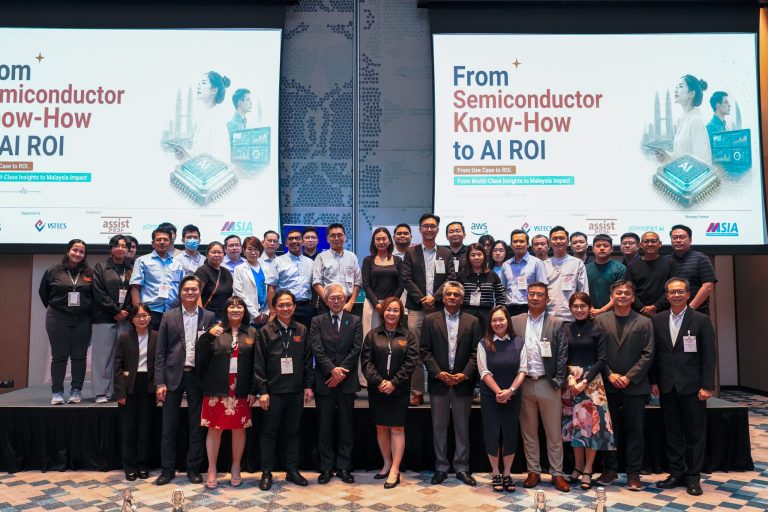
As Malaysia’s semiconductor industry continues to move up the value chain, manufacturers need AI to move beyond isolated experiments and become part of governed, repeatable workflows.

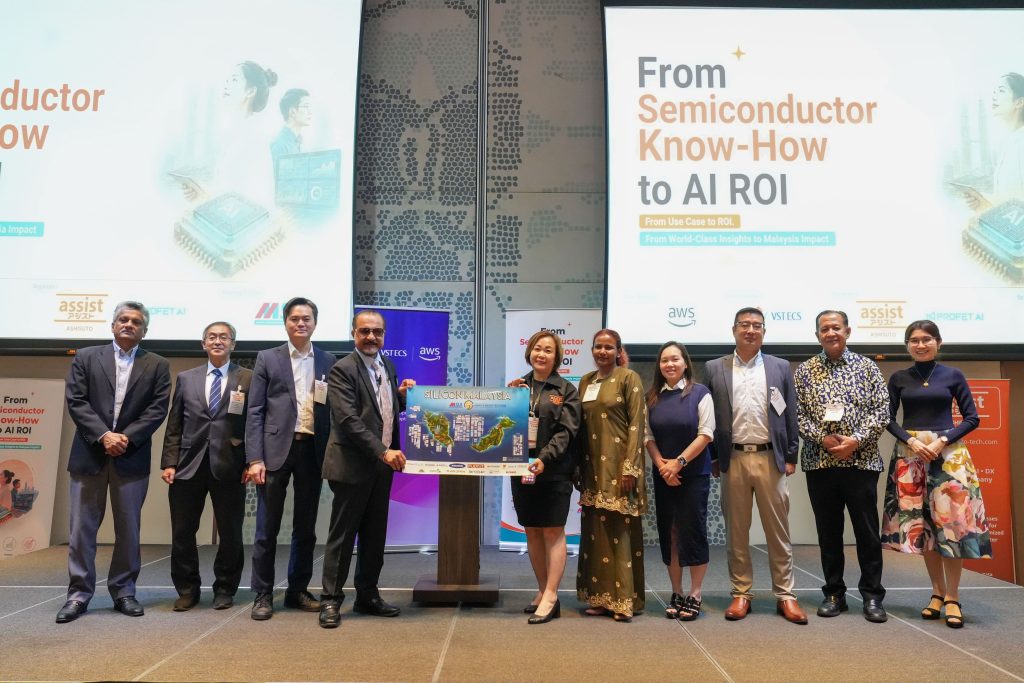
Profet AI and its Malaysian partner, Ashisuto Global Technologies, co-hosted the “From Semiconductor Know-How to AI ROI” forum in Penang, bringing together industry perspectives from Taiwan and Malaysia. The discussion explored how manufacturers can turn frontline expertise into governable, reusable AI assets and move AI from individual use cases toward measurable operational outcomes.
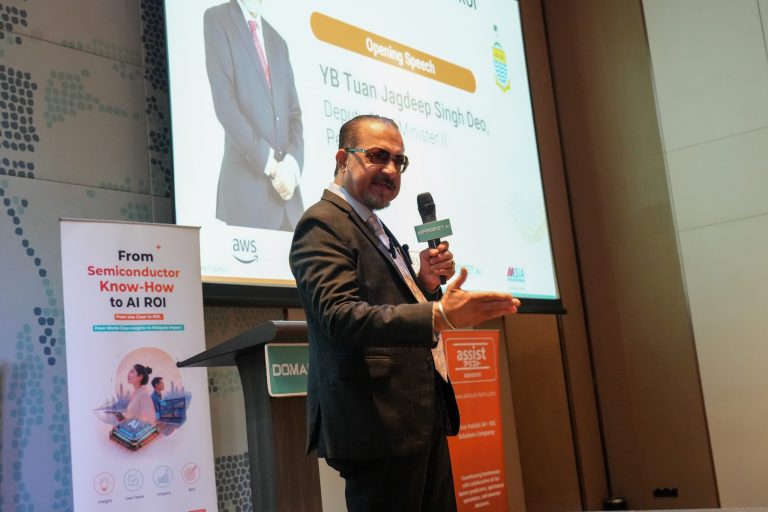
YB Tuan Jagdeep Singh Deo, Deputy Chief Minister II of Penang

The event opened with remarks from YB Tuan Jagdeep Singh Deo, Deputy Chief Minister II of Penang. In his address, he expressed his hope that more Taiwanese companies would continue to establish and deepen their presence in Penang, further expanding cooperation in manufacturing, technology, and talent development.

Penang has become a key hub for Malaysia’s semiconductor and electronics manufacturing industries and is continuing to move into higher-value areas such as IC design, advanced packaging, and advanced manufacturing. For Taiwanese companies expanding into Southeast Asia, the challenge is not only to transfer equipment and production capacity, but also to bring years of accumulated process expertise, quality know-how, and management practices into new manufacturing sites.

What Holds AI Back Is Often Not the Model, but the Gap Between Knowledge and Workflows

Drawing on practical experience from Taiwan’s semiconductor industry, Profet AI Special Assistant to the CEO James Yang noted that despite differences in company size, manufacturing processes, and IT architecture, manufacturers often face similar challenges when scaling AI. These include fragmented data, knowledge scattered across people and systems, difficulty scaling AI projects, and models that remain disconnected from day-to-day workflows.

Profet AI Specials Assistant to CEO, James Yang

“The question is not how many employees are using AI, but whether AI can shorten response time for a specific issue, improve first-pass yield, or help newer engineers make decisions closer to those of experienced engineers,” said Yang. “AI use cases need to start with the problems factories are already measuring. That is how AI connects to real operational value.”

Semiconductor manufacturing is shaped by batch conditions, product specifications, process recipes, equipment status, test programs, and environmental variables. The same sensor reading or inspection result can mean very different things depending on the product, tool, or stage of production. As a result, AI cannot rely on isolated data points alone. It needs to reconstruct the full manufacturing context behind each issue.

Data alone is also not enough. Companies need engineers to keep teaching AI what sound engineering judgment looks like. Models can identify patterns and possible causes, but frontline teams are still the ones who determine whether the evidence is sufficient, which constraints matter, and what action fits the production situation at hand. With each human review and feedback loop, individual experience can gradually be turned into lasting organizational capability.

“Our goal is not to replace people, but to extend what they can do,” Yang added. “When engineering knowledge, decision logic, and workflows are turned into governable, reusable AI assets, critical know-how is no longer confined to a single engineer or a single plant. It can be applied safely across teams and sites under the right governance.”

That thinking sits at the core of Profet AI’s Domain Twin™. Positioned as the enterprise AI brain, Domain Twin™ brings together predictive models, domain knowledge, workflows, and governance into a unified operating layer. AutoML enables engineers to build predictive models from structured manufacturing data through a no-code approach, while AI Studio provides an agentic AI collaboration environment for developing AI assistants, digital employees, and workflow-connected AI applications.

As AI becomes part of day-to-day workflows, governance cannot be treated as an afterthought. Companies need to know who initiated a task, which data, tools, and models the AI used, what actions it took, and what outcomes it produced. Only with a complete record, from identity and access to execution results, can AI scale from a single production line to multi-site and cross-border operations within a controlled, manageable, and auditable framework.

The Next Stage for OSAT Is About More Than Higher Levels of Automation

Taiwan Artificial Intelligence Association advisor Howard Hsieh approached the discussion from the perspective of the OSAT industry, extending it to how companies operate and make decisions. OSAT providers are simultaneously facing advances in packaging technologies, rising product and process complexity, cost and delivery pressures, talent shortages, and supply chain uncertainty. Traditional automation is effective at executing predefined rules, but when production conditions change rapidly and the causes of abnormalities interact with one another, companies need more than faster execution. They need to understand situations and make decisions faster.

AI is therefore beginning to enter a broader range of operational areas, including R&D and process innovation, production and equipment management, quality, supply chain, and energy management. It can help engineering teams narrow the search space for process parameters, identify equipment and quality risks earlier, and provide more timely decision support across orders, capacity, inventory, and energy use.

However, a growing number of AI use cases does not mean an enterprise has completed its AI transformation. If each department builds its own models, data environments, and operating processes, AI can create a new generation of information silos. To scale adoption sustainably, companies need shared AI and data platforms, clear governance and cybersecurity mechanisms, and an operating model that enables engineering, IT, data teams, and management to work together.

Taiwan Artificial Intelligence Association advisor Howard Hsieh

“As AI moves from copilots to coworkers, it becomes part of everyday work and decision-making, while continuing to learn from each round of feedback,” said Hsieh. “What needs to change is not only the system itself, but how companies design workflows, develop talent, and redefine the division of labor between people and AI.”

When equipment shows signs of abnormal risk, AI should do more than generate a prediction. It should be able to pull together relevant process records, compare past cases, recommend an inspection sequence, notify the responsible personnel, and track what happens next. In that sense, the value of AI shifts from simply providing answers to helping work get done.

That does not mean handing every decision over to AI. It means redesigning how people and AI work together. Companies need to clearly define which tasks can be automated, which actions require human confirmation, and which decisions must remain subject to expert review.

For that reason, AI transformation cannot be treated as an IT project alone. It also involves workflow design, decision rights, talent development, and management systems. Once AI becomes part of day-to-day operations, what changes is not just a technology stack, but how the organization understands problems and takes action.

From Industry Adoption to Measurable Operational Outcomes

Duncan Lee, Technical Director of the Malaysia Semiconductor Industry Association (MSIA), shared observations from the local industry, noting that AI adoption among Malaysian companies is increasing. The next stage, however, is to move beyond general-purpose AI tools toward deeper enterprise applications. In semiconductor manufacturing, AI needs to be built on a strong foundation of automation, data, and cross-functional collaboration so that it can support broader manufacturing decisions rather than solve isolated problems.

Tham Kok Tong, COO of Ashisuto Global Technologies, shared examples from Malaysian manufacturers to illustrate the AI adoption journey, from identifying business needs and preparing data to validating applications on the production floor. Whether predicting product defects using process and quality data or assessing equipment conditions through sensor and machine data, these cases shared a common starting point: a clearly defined operational problem tied to measurable indicators.

Companies need to determine whether the problem is linked to actual production or quality metrics, whether sufficient and usable data is available, whether model outputs can be translated into concrete actions, and whether improvements can be continuously measured after deployment. When problems, data, and actions are not connected, even a highly capable model is unlikely to deliver meaningful operational value.

Tham Kok Tong, Ashisuto Global Technologies

The Real Challenge Is Bringing AI Into Everyday Decision-Making

The event concluded with remarks from Shinya Machida, Consul-General of Japan in Penang, bringing to a close an exchange that connected industry perspectives from Taiwan, Malaysia, and Japan.

Across technology, talent, and operational processes, the real challenge for manufacturers is not to launch another PoC, but to bring AI into everyday decision-making and continuously deliver measurable operational outcomes.

Profet AI will continue to bring Taiwan’s manufacturing AI experience to more markets, working with local partners and manufacturers to turn frontline know-how into governable, reusable AI assets and move AI from individual use cases to ROI.

From Semiconductor Know-How to AI ROI: How Manufacturing AI Is Moving into Operations in Penang Read More »

Profet AI Supports GIS in Advancing Manufacturing AI from Deployment to Organizational Capability

As competition intensifies across the high-end consumer electronics supply chain, manufacturers are facing greater pressure to improve quality, delivery speed, and operational resilience across increasingly distributed global supply networks. Profet AI, a manufacturing-focused AI software company, has continued to deepen its collaboration with General Interface Solution (GIS) Holding Ltd., supporting GIS in expanding AI applications from yield, quality, and efficiency improvement on the production floor to cross-process knowledge extraction, model development, and organizational capability building.

Over roughly two years of collaboration, the two companies have completed more than 100 AI projects and built over 1,500 AI models across manufacturing scenarios including process improvement, quality analysis, and anomaly prediction. Through Profet AI’s platform and implementation methodology, GIS has moved beyond using AI to solve isolated production line issues. AI is gradually becoming a working method that supports continuous improvement and decision-making across engineering teams.

From Customer Requirements to Supply Chain Competition, AI Becomes a Key Driver of Manufacturing Upgrade

GIS Chairman and Chief Strategy Officer Chou Hsien-ying said the company’s AI adoption was driven not only by the rapid development of AI technology, but also by customer expectations around quality, delivery, and response speed. As competition increases in the high-end consumer electronics supply chain, manufacturers must continue strengthening their operational capabilities to remain competitive in an environment shaped by supply chain diversification and rising resilience requirements.

“AI adoption is not simply about following a technology trend,” Chou said. “What matters is whether AI can truly enter company operations and help us continuously improve quality, delivery, and response speed, so we can better serve our customers and supply chain partners.”

He also noted that the rapid rise of regional supply chains has made supply chain security and resilience a higher priority for both countries and enterprises. For manufacturers, the key question is no longer only where to deploy production capacity, but how to use AI to improve quality, speed, and overall competitiveness across operations.

More Than 100 AI Projects Create New Room for Process Improvement

In terms of tangible results, GIS has used AI to re-examine process data that was previously considered close to its improvement limit, uncovering new opportunities for optimization.

On one optical display film production line, for example, the defect rate related to particle contamination had previously approached 10%. With Profet AI’s support in building models, analyzing key factors, and adjusting process parameters, the defect rate was reduced to nearly zero. In another glue coating process, bubble-related defects were previously around 0.3% to 0.4%. After AI-driven analysis and improvement, the rate was reduced to approximately 0.2%, cutting defects by about half.

The significance of these results goes beyond individual metric improvements. They also helped engineering teams recognize that many processes that appear stable or already within target can still reveal new room for optimization through AI and data analysis.

From SOPs to Cross-Process Correlation, Turning Senior Engineering Experience into Replicable Capability

Manufacturing improvement has traditionally relied heavily on the experience accumulated by senior engineers, which is then translated into standard operating procedures. However, most conventional SOPs remain limited to a single station or process. When problems involve cross-process correlations, manufacturers still depend heavily on the judgment of experienced engineers.

Through its collaboration with Profet AI, GIS has further transformed process data and know-how accumulated across different stations into models. This helps engineering teams identify correlations across processes and gradually shift process improvement from individual experience toward capabilities that can be continuously accumulated, replicated, and transferred through systems.

“In the past, many improvements depended on strong engineers and senior engineers because they were the ones who held cross-process know-how,” Chou said. “The major value of AI is that it helps us identify these cross-process correlations and codify them into models and operational language. This allows process improvement to gradually move from relying on people to relying on models and systems.”

Profet AI Provides Not Just Tools, but a Method Companies Can Internalize

Speaking about why GIS chose Profet AI, Chou said GIS valued Profet AI’s manufacturing experience and its proven implementation experience across relevant industries. More importantly, Profet AI does not simply help enterprises complete individual projects. It provides a platform and methodology that helps companies build their own AI application capabilities.

Chou described the collaboration as a capability-building process. The GIS team first learned from Profet AI how AI can be introduced into production and manufacturing workflows. The two teams then jointly identified improvement topics and worked together to move from learning to implementation, with GIS’s internal teams collaborating closely with Profet AI’s consultants.

“Profet AI is more like giving us the fishing rod, not just the fish,” Chou said. “Through this process, we learned how to develop our own improvement know-how and AI application culture within the company.”

Jerry Huang, Co-founder and CEO of Profet AI, said the value of manufacturing AI lies not only in building models, but in turning those models into capabilities that can continuously operate within the enterprise.

“True manufacturing AI should not stop at isolated projects or one-time improvements,” Huang said. “It must turn frontline know-how into enterprise AI assets that can be managed, replicated, and scaled. The GIS case shows how AI can move from single-process improvement to becoming a method for continuous organizational progress.”

Through this collaboration, Profet AI and GIS demonstrate a complete path for manufacturing AI, from project implementation and process improvement to organizational capability building. As global manufacturers continue to address supply chain restructuring, knowledge transfer, and operational efficiency challenges, turning frontline experience into a Domain Twin™ that can be preserved, scaled, and replicated is becoming an important direction for enterprises seeking to move AI from deployment to long-term competitive advantage.

Profet AI Supports GIS in Advancing Manufacturing AI from Deployment to Organizational Capability Read More »

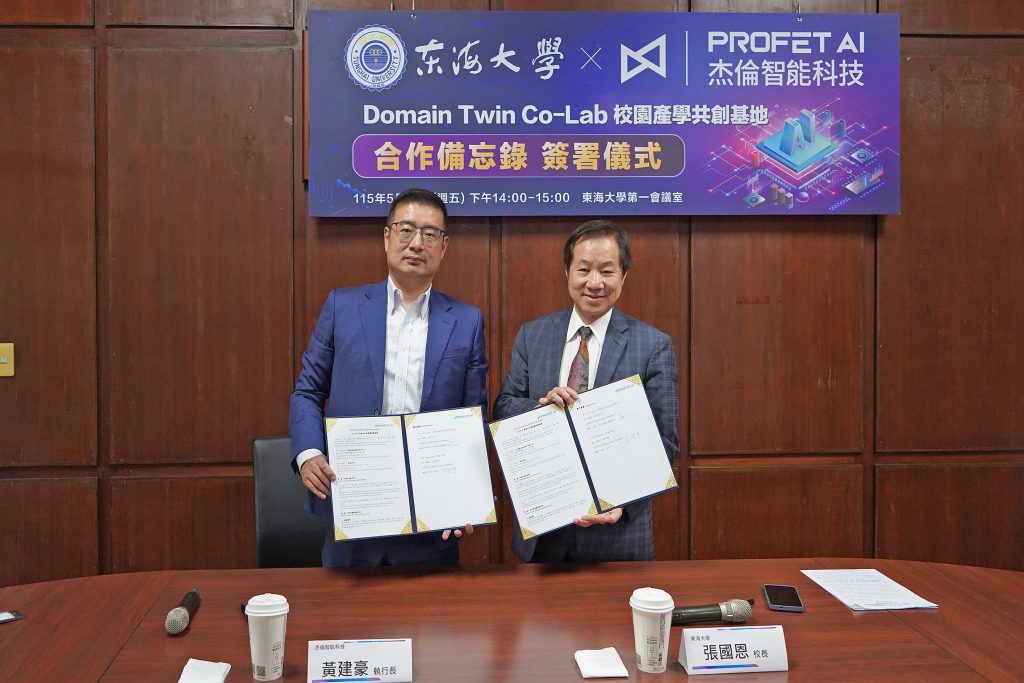
Profet AI Brings Domain Twin Co-Lab to Tunghai University

Profet AI Brings Domain Twin Co-Lab to Tunghai University

Advancing Enterprise-Grade AI Agent Governance in Campus AI Education and Real-World Practice

Profet AI today signed a Memorandum of Understanding (MOU) with Tunghai University, bringing the Profet AI Domain Twin Co-Lab campus industry-academia co-creation program to Tunghai University. Under the MOU, Profet AI will provide its Domain Twin™ platform as a key resource to support the university’s AI education, non-commercial research, and industry-academia collaboration.

The collaboration will connect with Tunghai University’s existing OpenClaw practice environment and introduce enterprise-grade AI Agent governance capabilities through Profet AI Domain Twin. Centered on teaching, research, hands-on exploration, and industry-academia engagement, the partnership aims to help students understand the security, management, governance, and human-AI collaboration capabilities required as Agentic AI moves from standalone tools into real campus and enterprise deployment.

Tunghai University has actively advanced AI education and campus innovation in recent years. The university has built Taiwan’s most powerful campus AI Pod computing center and the largest OpenClaw “lobster pool” environment, while continuing to promote its innovative “Students as Teachers” educational philosophy. These efforts enable students, faculty, and administrative teams to more quickly engage with AI practice scenarios. With Profet AI Domain Twin Co-Lab entering Tunghai University’s AI education framework, the collaboration will further address the critical link that enables agentic AI to move from “usable and executable” toward being “controllable, manageable, and auditable.” This will allow students not only to learn how to operate AI tools, but also to understand the governance and deployment challenges AI Agents face when entering real organizational workflows.

From Passive Query to Proactive Service: Building an Enterprise-Grade AI Agent Practice Environment

As Agentic AI rapidly enters education, administration, and research scenarios, AI Agents are no longer only tools for answering questions. They are beginning to understand workflows, call systems, generate documents, and assist with task execution. However, as AI Agents enter real organizational workflows, the challenge facing schools and enterprises is also shifting from “whether AI can be used” to “whether AI can be managed, audited, tracked, and trusted.”

Under this framework, Tunghai University’s existing AI Pod computing center and OpenClaw practice environment provide students with a hands-on foundation for engaging with agentic AI. Profet AI Domain Twin further brings in enterprise-grade AI governance thinking, helping bring distributed AI Agent tools into a framework that is manageable, traceable, and auditable. This allows AI Agents to evolve from standalone automation tools into digital service and governance capabilities that are closer to real industry practice.

Domain Twin Co-Lab Cultivates Not Only AI Users, but a New Generation of Talent Capable of Designing, Managing, and Governing AI

Profet AI has long focused on AI implementation in manufacturing. With Domain Twin™ at its core, Profet AI helps enterprises transform process experience, domain knowledge, and operational know-how into AI assets that can be preserved, governed, and replicated. By bringing Domain Twin Co-Lab to Tunghai University, Profet AI is extending its enterprise-grade AI implementation experience into the campus environment, enabling students to learn AI tools while also understanding the workflow design, permission governance, data security, and human-in-the-loop review mechanisms required when AI Agents enter real organizational processes.

“The value of AI Agents lies not only in whether they can automatically execute tasks, but more importantly in whether organizations can clearly understand what they did, what they accessed, where their permissions came from, and whether actions can be traced and controlled when issues occur.” sadi Jerry Huang, CEO and Co-founder of Profet AI, “Without governance mechanisms, AI Agents may create new forms of shadow AI and cybersecurity risk. But when managed through a unified control plane, they have the potential to become an important foundation for enterprise knowledge accumulation, workflow automation, and cross-domain collaboration. Profet AI has long focused on AI implementation in manufacturing, and we understand that what enterprises truly need is not just smarter tools, but an architecture that allows AI to enter operational workflows while remaining securely governed. We are pleased to collaborate with Tunghai University through Domain Twin Co-Lab to help students connect with the practical standards required for future enterprise AI Agent deployment, and to cultivate a new generation of AI talent with strong awareness of security governance and practical industry capabilities.”

Kuo-En Chang, President of Tunghai University, mentioned that Tunghai has been actively building an advanced computing environment and promoting its innovative “Students as Teachers” educational philosophy. He expressed appreciation for Profet AI’s provision of advanced software resources. Built upon Tunghai’s robust hardware foundation and OpenClaw practice environment, this collaboration will strengthen the university’s AI governance framework, guide students in real-world practice scenarios, and deepen their understanding of the human-AI collaboration mindset and technological literacy required for enterprise deployment, further improving the efficiency of university administration and teaching.

Chao-Tung Yang, Chief Information Officer of Tunghai University, added that this collaboration brings Profet AI’s technology foundation into the university’s AI Pod computing center. Through the powerful computing capabilities enabled by NVIDIA B200 chips, combined with the workflow governance mechanisms introduced by Domain Twin Co-Lab, Tunghai University will establish a leading practice environment that brings together both “AI computing power” and “AI governance.” This will help students move beyond learning standalone tools and toward hands-on creation within enterprise-grade governance architectures, cultivating the decision-making and innovation capabilities essential in the AI era.

Profet AI Brings Domain Twin Co-Lab to Tunghai University Read More »

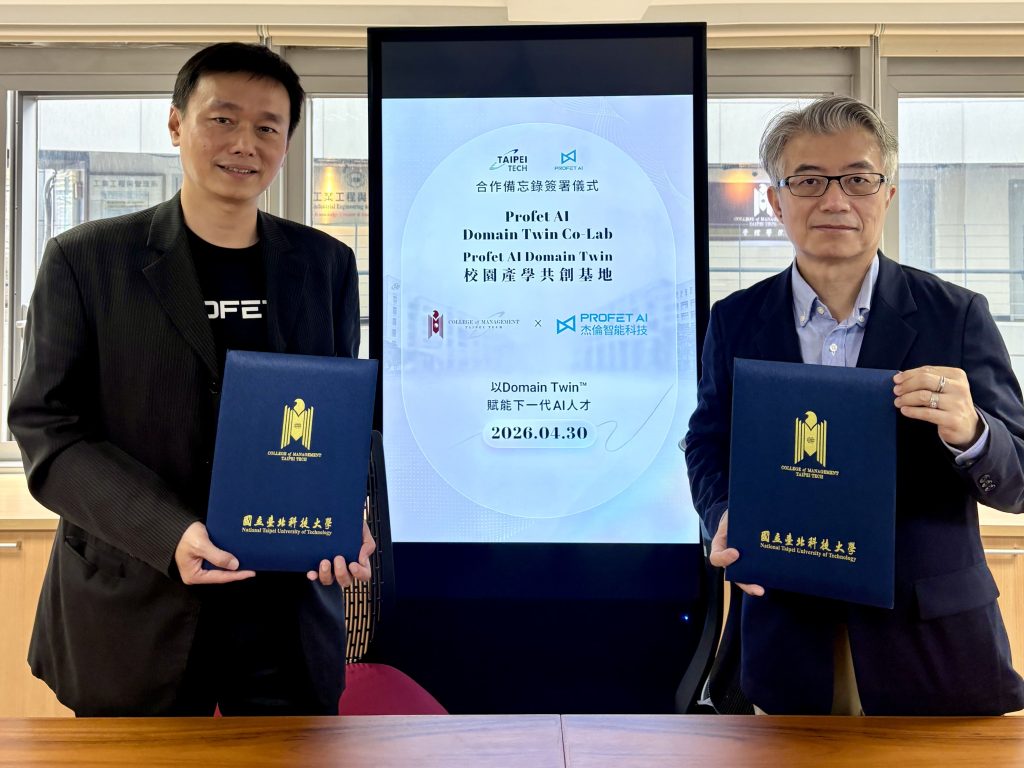
Profet AI Launches “Domain Twin Co-Lab” and Partners with NTUT College of Management to Cultivate AI Talent

Profet AI Launches “Domain Twin Co-Lab” and Partners with NTUT College of Management to Cultivate AI Talent

Profet AI today held a memorandum of understanding signing ceremony with the College of Management at National Taipei University of Technology (NTUT), marking the launch of its first university-focused donation initiative, the Profet AI Domain Twin Co-Lab. As part of the collaboration, Profet AI will donate its Domain Twin platform as a key resource for teaching and research, with the goal of helping students engage earlier with the next wave of AI applications and build practical capabilities in human-AI collaboration, workflow understanding, and application design. The partnership will also cover industrial AI applications, academic research, talent development, and broader industry-academia collaboration.

Left: Max Chen, Chief R&D Officer of Profet AI;
Right: Morris Fan, Dean of the College of Management at National Taipei University of Technology

This is also Profet AI’s first donation initiative specifically designed for universities. As AI continues to evolve from content generation to task execution, the capabilities expected of future talent are also changing. It is no longer enough to simply know how to use AI tools. Students increasingly need to understand how AI can truly enter workflows, connect with knowledge and systems, and generate action in real-world scenarios. For Profet AI, this collaboration is not just about bringing a platform into the classroom. It is about bringing the mindset and capabilities required for the next generation of AI applications into teaching and research at an earlier stage.

Profet AI’s Domain Twin platform brings together both AutoML and Agentic AI capabilities. Unlike many AI tools that remain focused on question answering, search, or isolated assistance, Domain Twin is designed to move AI from “answering questions” to “executing tasks.” It supports AI agents, workflows, automation, and tool integration, enabling AI to better align with real workplace needs. At the same time, the platform incorporates governance and security mechanisms to address enterprise requirements for control, accountability, and manageability when deploying Agentic AI.

This collaboration also builds on an existing foundation between the two sides. Professor Morris Fan, Dean of the College of Management at NTUT and a long-time advisor to Profet AI, has previously collaborated with the company through coursework that combined Profet AI’s AutoML capabilities with real industrial case studies. These efforts gave students exposure not only to AI tools themselves, but also to how AI can be applied to real business problems and industry settings. This latest collaboration extends that foundation further into Agentic AI applications, advancing the relationship from course-based exchange to a broader and more structured framework for academic collaboration and talent cultivation.

“AI is rapidly evolving from generative content creation to Agentic AI that can understand, reason, and take action.” Said Fan., “The value of this collaboration is not simply that students gain access to a new tool. More importantly, they gain an earlier understanding of how AI will truly enter workflows, knowledge environments, and decision-making contexts in the future. We hope this partnership will help students build stronger interdisciplinary integration and practical skills, while also creating more meaningful connections between academia and industry.”

“We have always believed that the most competitive talent of the future will not simply be those who know how to use AI, but those who know how to make AI work together with knowledge, tools, and systems to drive real action inside workflows. By donating Domain Twin, we hope students can understand earlier that the next generation of AI is not just a chatbot, but a working partner that can help execute tasks, move processes forward, and support decision-making. This is not only the starting point of Profet AI’s first university donation initiative, but also the beginning of a broader model we hope to extend to more campuses in the future as we work with academia to cultivate talent that is better aligned with the next stage of Agentic AI.” Mentioned Max Chen, Co-founder and Chief R&D Officer of Profet AI.

For Profet AI, the collaboration with NTUT’s College of Management marks an important step in advancing industry-academia engagement and talent development. It also serves as a starting point for future campus partnerships. Looking ahead, Profet AI aims to expand Domain Twin and its AI capability development model to more universities, deepen academic collaboration and industry connection, and help more young talent not only learn how to use AI, but also understand how AI can truly enter industrial and workplace settings.

Profet AI Launches “Domain Twin Co-Lab” and Partners with NTUT College of Management to Cultivate AI Talent Read More »

Profet AI and PSTC Academy Partner to Build Cross-Border AI Talent Pipeline and Advance AI-Driven Data Center Operations

Profet AI and PSTC Academy Partner to Build Cross-Border AI Talent Pipeline and Advance AI-Driven Data Center Operations

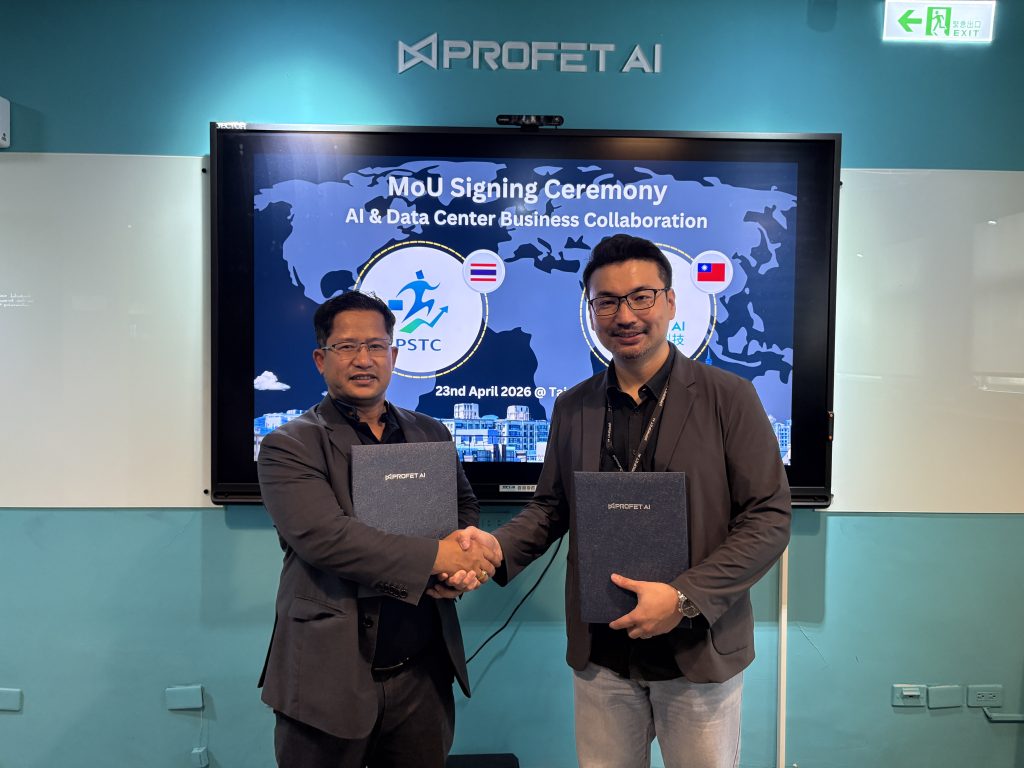
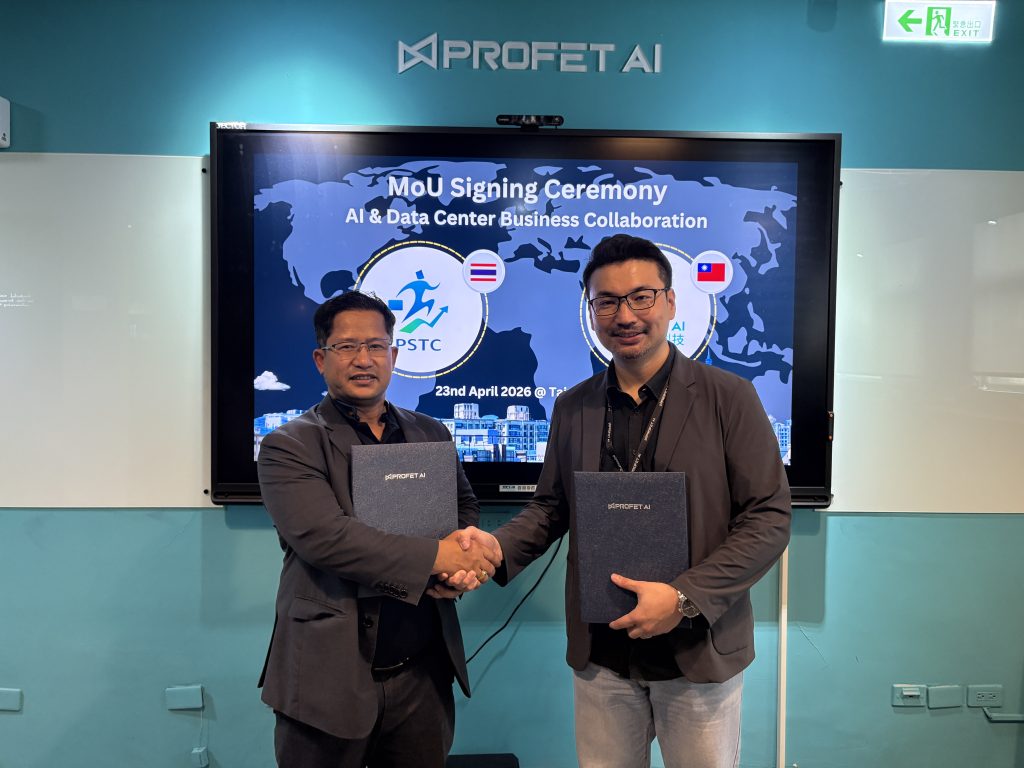
[TAIPEI / BANGKOK, April 23, 2026] — Profet AI, a Taiwan-headquartered AI software company focused on manufacturing, today announced a strategic collaboration with PSTC Academy to jointly advance AI talent development and AI-powered data center innovation across Taiwan and Southeast Asia. The collaboration will bring together Profet AI’s Domain Twin capabilities with PSTC Academy’s training, certification, and digital infrastructure expertise to create more practical pathways from learning to deployment. PSTC Academy publicly positions itself around data center, cloud, and AI training and consulting, with a regional footprint across Thailand and several APAC markets.

Left, Poramet Ruangnoo, Group CEO & Co-Founder of PSTC Academy; Right, Mark Chen, Special Assistant to CEO of Profet AI

[Image: Left,  Poramet Ruangnoo, Group CEO & Co-Founder, PSTC Academy.; Right, Mark Chen, Special Assistant to CEO, Profet AI.

The collaboration will center on two key areas. The first is academic and certification development. Both parties plan to work toward a cross-border AI certification model that connects hands-on training with internationally recognized certification pathways, helping students and early-stage talent move more directly from software proficiency to job-ready validation. As part of this effort, Profet AI will provide practical training on AI tools and workflows, while PSTC Academy will contribute certification-oriented frameworks and standards to support the joint development of applied AI courses for manufacturing and enterprise use cases.

The second area is AI-enabled data center operations. By combining Profet AI’s domain twin with PSTC Academy’s data center domain expertise, the collaboration is expected to explore practical AIOps use cases such as predictive maintenance for UPS, cooling systems, and generators, as well as real-time anomaly detection across infrastructure, network traffic, and power consumption. The goal is to help data center operators improve uptime, operational visibility, and service stability.

The collaboration will also explore an AI-as-a-Service model for colocation and infrastructure customers. This may include AI-ready environments that allow customers to access pre-integrated AI tools within PSTC-managed infrastructure, as well as subscription-based access to AI capabilities through local service models. For industrial customers with stricter data governance requirements, the two sides also plan to support localized model training within secure data center environments, helping enterprises keep sensitive operational data within tightly controlled infrastructure.

“AI adoption now needs to go beyond experimentation. What enterprises increasingly need is a practical path that connects talent development, operational deployment, and scalable infrastructure,” said Jerry Huang, CEO of Profet AI. “Through this collaboration with PSTC Academy, we hope to help build a more execution-ready ecosystem, from university and professional training to real-world AI applications in data center and enterprise environments.”

“PSTC Academy has long focused on building digital infrastructure capability across the region,” said Poramet Ruangnoo, Group CEO & Co-Founder of PSTC Academy. “By working with Profet AI, we see an opportunity to connect certification, applied AI training, and infrastructure operations more closely, and to support both workforce development and next-generation data center services.”

As AI moves deeper into industrial and enterprise operations, the ability to pair practical talent development with trusted deployment environments is becoming increasingly important. Profet AI and PSTC Academy believe this collaboration can help accelerate that shift by linking applied learning, certification pathways, and infrastructure-ready AI adoption in a more structured and scalable way.

About Profet AI

Profet AI is an AI software company focused on manufacturing. Its Domain Twin platform, powered by AutoML, AI Studio, and AILM, helps enterprises preserve, scale, and replicate frontline know-how as an enterprise AI brain where knowledge never retires. Serving manufacturers across Asia, Profet AI enables smarter, more scalable operations from a single production line to multi-site, cross-border manufacturing.

About PSTC Academy

PSTC Academy is a Thailand-based training and consulting institution focused on data center, cloud, and AI infrastructure. Founded in 2022, the organization provides professional training, certification-related programs, and consulting services for digital infrastructure development across multiple APAC markets.

Profet AI and PSTC Academy Partner to Build Cross-Border AI Talent Pipeline and Advance AI-Driven Data Center Operations Read More »

Zentera Systems and Profet AI Partner to Deliver Zero Trust Security for Agentic AI in Manufacturing​

Zentera Systems and Profet AI Partner to Deliver Zero Trust Security for Agentic AI in Manufacturing

Partnership pairs Profet AI's trusted Domain Twin™ platform with Zentera's Ensage™ AI to protect AI agents operating in sensitive production environments

Zentera Systems and Profet AI today announced a go-to-market partnership to secure agentic AI deployments in manufacturing environments. Under the partnership, Zentera’s Ensage AI platform will provide Zero Trust security in the compute and network layers for Profet AI’s Domain Twin™ platform, which is used by more than 300 manufacturers across the semiconductor, electronics, PCB, EMS, and advanced materials industries. The companies will demonstrate the integrated solution at RSA Conference 2026, North Hall, Booth #4618, March 23–26.

Profet AI has established itself as Asia-Pacific’s leading no-code AutoML software for manufacturing. Its Domain Twin™ platform enables manufacturers to digitize the tacit expertise of veteran engineers – process tuning, quality assessment, parameter optimization – into reusable AI models that can be replicated across production lines, factories, and global operations. Customers include major brands in the EMS, semiconductor OSAT, IC design, display panel, and materials sectors. As Profet AI expands its platform’s agentic AI capabilities through AI Studio, its enterprise-grade agent collaboration environment, securing the connections between AI agents, production data, and enterprise resources has become a critical priority.

“AI agents can deliver tremendous value in manufacturing, but security cannot be an afterthought,” said Jerry Huang, CEO of Profet AI,  “Our customers trust Domain Twin with their most valuable competitive asset — decades of accumulated production expertise. Partnering with Zentera gives us infrastructure-level Zero Trust protection that ensures this knowledge stays secure as our platform’s agentic capabilities scale.”

Closing the Security Gap for Manufacturing AI Agents

As manufacturers deploy AI agents across production systems, predictive maintenance platforms, and data analytics workflows, these agents create new machine-to-machine paths between AI runtimes, databases, MCP servers, and external LLMs. Traditional security tools lack visibility into these connections and cannot enforce granular access controls at the computing and infrastructure level.

Ensage AI extends Zentera’s Zero Trust Architecture to address security blind spots created by agentic AI — including unauthorized access, shadow AI, privilege escalation, IP spoofing, man-in-the-middle attacks, and uncontrolled data movement between AI systems and enterprise resources in the enterprise compute and network environments.

“Profet AI is solving one of manufacturing’s most critical challenges — preserving and scaling the irreplaceable expertise that drives competitive advantage,” said Dr. Jaushin Lee, CEO of Zentera Systems. “As that knowledge becomes embedded in AI agents that actively interact with production systems, securing those agent pathways at the network layer is essential. This partnership ensures manufacturers can scale agentic AI while meeting corporate governance, risk, and compliance requirements with confidence.”

Infrastructure-Level Zero Trust for Agentic AI

Ensage AI monitors and controls agentic behavior across three enforcement planes:

  • Inbound Controls – Authenticate and authorize who can access and operate AI runtimes
  • Outbound Controls – Govern which LLMs, tools, and domains agents can reach
  • Internal Controls – Restrict agent access to sensitive enterprise and operational resources

The platform provides complete visibility into agent-to-resource traffic, enforces policy-based access controls, prevents unauthorized data leaks, and creates audit trails from the network layer for compliance and governance. Unlike cloud-routed SASE models, Ensage AI operates on-premises or in hybrid environments – critical for manufacturing and industrial operations where latency, data sovereignty, and operational resilience are paramount.

Live Demonstration at RSA Conference

At RSA Conference 2026, the companies will demonstrate Ensage AI protecting Profet AI’s agentic platform in a live workflow scenario. The demonstration will showcase how Zero Trust Architecture secures MCP queries, agent-to-resource communications, and access to sensitive manufacturing data — all while maintaining the performance and flexibility AI applications require.

RSA Conference attendees are invited to visit Booth #N4618 to see the demonstration and discuss secure agentic AI deployment strategies with engineers from both companies.

About Zentera

Zentera Systems is the Zero Trust security company that protects what moves across enterprise networks – whether it is a user, a workload, or an AI agent. The company’s solutions deploy as an overlay on top of any infrastructure – IT, OT, cloud, or hybrid – to enforce Zero Trust security without re-architecting the network. With the launch of Ensage AI, Zentera now extends this same foundation to secure the autonomous AI agents operating inside enterprise environments. Zentera is headquartered in Silicon Valley and trusted by Global 2000 enterprises across semiconductor, financial services, healthcare, and public sector.

About Profet AI

Profet AI is a Taiwan-headquartered AI software company focused on manufacturing. Its Domain Twin™ platform—powered by AutoML (Machine Learning), AI Studio (Agentic AI), and AILM (AI governance and lifecycle management), helps enterprises preserve, scale, and replicate frontline know-how as an enterprise AI brain where knowledge never retires.

Serving over 300 manufacturers across Asia across industries such as electronics, semiconductors, PCB, IC design, display panels, and advanced materials, Profet AI enables smarter, more scalable, asset-light operations from a single production line to multi-plant, cross-border manufacturing.

Zentera, Ensage, and CoIP are trademarks of Zentera Systems, Inc., in the United States and other countries. All other trademarks cited here are the properties of their respective owners.

Contact Us to Learn More

Zentera Systems and Profet AI Partner to Deliver Zero Trust Security for Agentic AI in Manufacturing​ Read More »

,

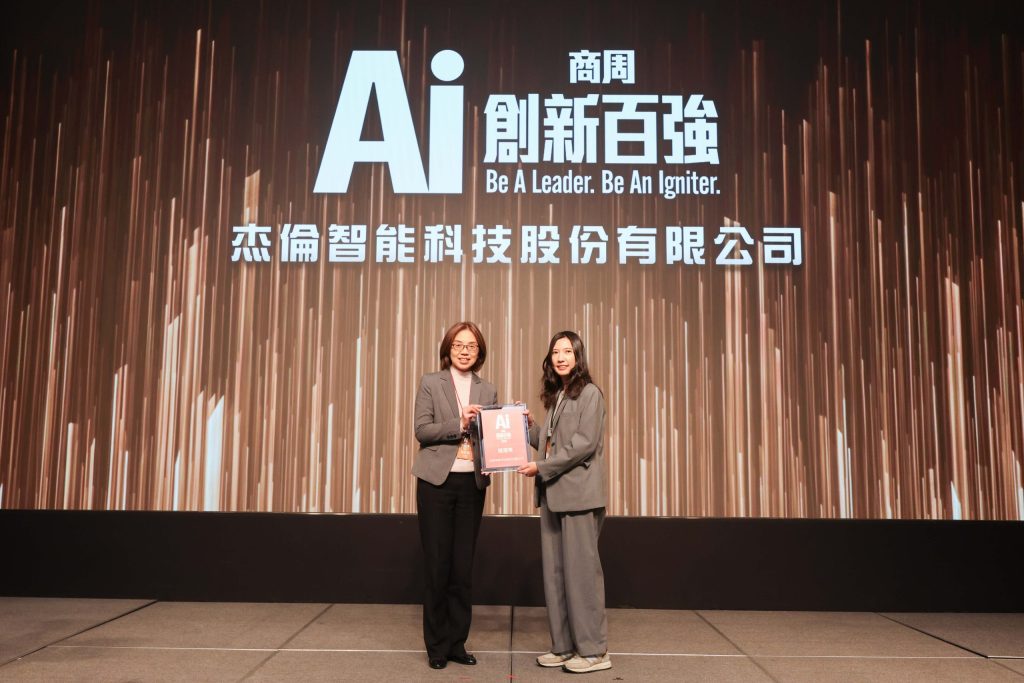
Profet AI Honored in Business Weekly’s “AI Innovation Top 100,” Leveraging Domain Twin™ to Accelerate Business Conversion

Profet AI Honored in Business Weekly’s “AI Innovation Top 100,” Leveraging Domain Twin™ to Accelerate Business Conversion

The award was accepted by Global Marketing Director Amilia Chen (right) and presented by Betty Hu (left), Director-General of the Secretariat, Ministry of Digital Affairs.

Profet AI has actively advanced the deployment of enterprise-grade AI platforms and real-world applications in recent years, continuously deepening its digital transformation and innovation initiatives. This commitment has been recognized with an award in the inaugural “AI Innovation Top 100” by Business Weekly, highlighting Profet AI’s comprehensive achievements and practical capabilities in AI adoption, application implementation, and organizational enablement.

The Business Weekly “AI Innovation Top 100” evaluation focuses on whether AI solutions genuinely address real pain points, create measurable value, and build sustainable organizational capabilities with demonstrable impact. Profet AI’s selection reflects the judges’ recognition of its success in transforming AI from isolated tools into scalable, process-driven organizational capabilities.

Domain Twin™–Powered AI Assistant for Opportunity Decision-Making and Deal Assignment

Among more than 400 enterprise submissions, Profet AI was selected for its internally developed business opportunity development and decision-making workflow powered by Domain Twin. Through its “AI Opportunity Development Assistant,” global teams can rapidly generate tailored business development content, while AI models provide opportunity potential scores. These insights enable managers to prioritize deal assignments and resource allocation based on AI recommendations, significantly improving resource efficiency and overall deal conversion speed.

This workflow also progressively quantifies and standardizes decision factors that previously relied on the tacit knowledge of senior staff—such as industry momentum and stakeholder maturity. As a result, overseas offices and new team members can evaluate opportunity quality using a consistent decision logic, reducing onboarding time and minimizing decision discrepancies.

In addition, Profet AI has continuously organized internal AI hackathons in recent years, encouraging employees to address real operational pain points and rapidly validate solutions. This approach moves AI applications beyond individual productivity tools toward cross-functional, reusable process transformation, steadily building organizational innovation momentum and data-driven thinking.

Looking ahead, Profet AI will continue to deepen its AI applications. Through Domain Twin™, the company aims to help more enterprises transform critical know-how into operational, scalable AI assets—creating long-term operational and growth value.

Profet AI Honored in Business Weekly’s “AI Innovation Top 100,” Leveraging Domain Twin™ to Accelerate Business Conversion Read More »

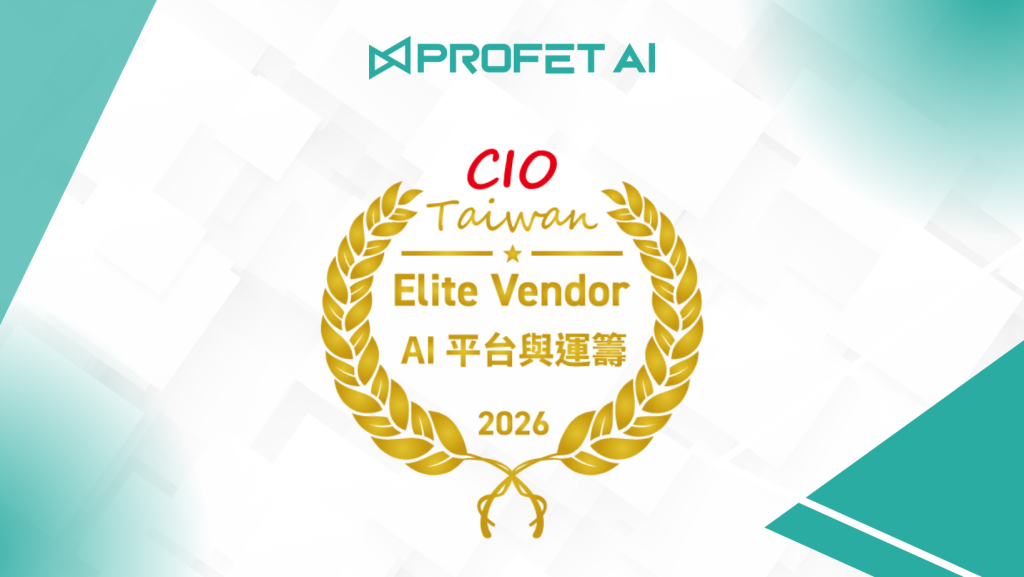
Profet AI Selected as CIO Taiwan 2026 Elite Vendor

Profet AI Selected as CIO Taiwan 2026 Elite Vendor

Domain Twin Recognized for Building Enterprise-Grade AI Platform Capabilities

CIO Taiwan has officially announced the results of its 2026 Elite Vendor survey. Conducted in late 2025, the survey collected more than 600 valid responses from CIOs, IT leaders, and digital transformation decision-makers across industries in Taiwan. The findings indicate that AI platforms and governance capabilities have become a critical criteria for enterprise vendor evaluation. Leveraging its proven AI platform and Domain Twin implementation results, Profet AI has been selected as a 2026 Elite Vendor.

As digital technologies and industrial environments continue to evolve rapidly, the key challenge for manufacturers is no longer whether AI is feasible, but whether it can operate sustainably, scale continuously, and integrate deeply into core enterprise processes. Drawing on years of market observation, CIO Taiwan conducts the Elite Vendor survey to capture insights from IT and digital transformation leaders across industries. The 2026 results reveal that enterprises now place strong emphasis on AI platform architecture and governance, particularly in manufacturing, semiconductor, and high-tech sectors. A widely shared and urgent challenge is how to transform isolated project successes into organizational capabilities that can be replicated across sites.

Domain Twin, proposed by Profet AI, is designed to address this exact challenge. Rather than merely digitizing models or data, Domain Twin systematically encapsulates decision logic, process knowledge, and operational experience accumulated by frontline experts into manageable and reusable AI domain models, all governed and deployed within an enterprise-grade AI platform. Through Domain Twin, enterprises can rapidly replicate successful AI applications from a single production line or factory to other sites—or even across global operations—significantly accelerating AI scale-out.

CIO Taiwan notes that a clear trend emerges from the 2026 survey results: when selecting AI vendors, enterprises are no longer focused solely on model accuracy or short-term performance. Instead, they increasingly value whether AI capabilities can be inherited, reused, and governed over the long term. Vendors that can combine robust AI platforms with a Domain Twin methodology—elevating AI from isolated “projects” to a sustainable enterprise capability—are becoming the new market standard.

Profet AI’s selection as a 2026 Elite Vendor reflects strong recognition from Taiwanese enterprises of its ability to drive real-world AI adoption through Domain Twin. By systematizing frontline decision-making expertise and process knowledge into manageable AI domain models, Domain Twin enables enterprises to accelerate AI deployment, expansion, and replication—transforming AI into a core capability that delivers long-term value.

Source:
CIO Taiwan Announces the 2026 Elite Vendor List of Taiwan’s Most Trusted Technology Partners https://www.cio.com.tw/105827/

Profet AI Selected as CIO Taiwan 2026 Elite Vendor Read More »

Profet AI and Intelligent Systems Innovation (ISI) Sign Memorandum of Agreement to Advance AI Transformation in the Philippines

Profet AI and Intelligent Systems Innovation (ISI) Sign Memorandum of Agreement to Advance AI Transformation in the Philippines

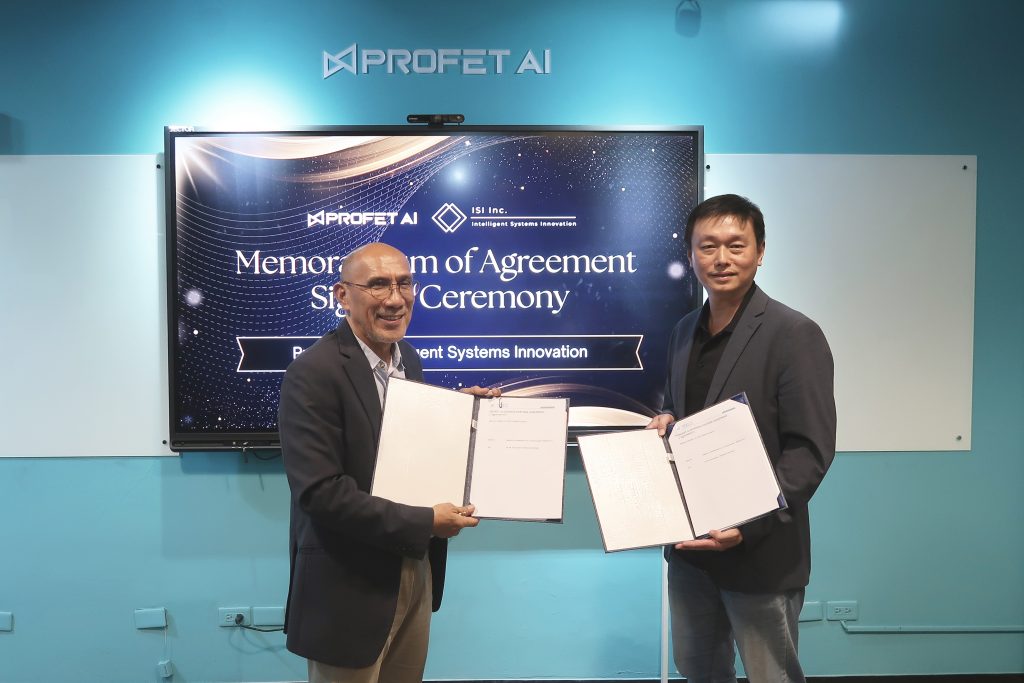
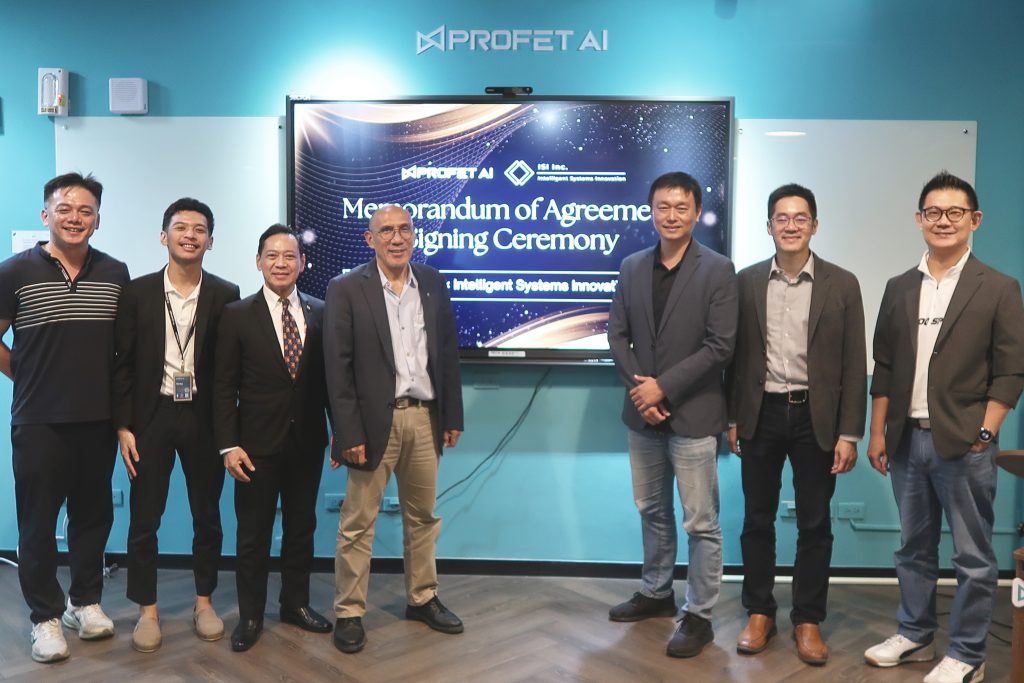
Profet AI, a leading industrial AI software company from Taiwan, officially signed a Memorandum of Agreement (MOA) with Intelligent Systems Innovation (ISI), a Philippine technology company specializing in intelligent systems, automation, and applied AI solutions. This partnership marks a significant milestone in accelerating the country’s digital transformation and strengthening collaboration between Taiwan and the Philippines in the field of applied artificial intelligence.

A Shared Vision for AI-Driven Industrial Transformation

The MOA signing ceremony took place at Profet AI’s headquarters in Taipei, with representatives from both organizations in attendance, including Dr. Elmer Dadios, Founder and Chairman of ISI, and Dr. Alvin Culaba, Distinguished Professor of Mechanical Engineering at De La Salle University, alongside Profet AI’s executive team led by Global General Manager Jonathan Yu.
The event symbolizes a strong commitment to fostering cross-border cooperation in AI education, research, and industrial innovation.

ISI operates at the intersection of industry, academia, and government collaboration, focusing on the development of intelligent systems and automation technologies. Supported by the Philippine Department of Science and Technology (DOST), industry leaders, and top universities, ISI’s multidisciplinary team of engineers, researchers, and innovators plays a vital role in advancing AI research and driving its real-world adoption across sectors.

Empowering Industry, Academia, and Society

Through this partnership, Profet AI and ISI aim to strengthen the capabilities of local industries, including semiconductors, electronics, FMCG, and utilities, by leveraging Profet AI’s Domain Twin™ Platform and its library of over 5,500 industrial AI use cases. The collaboration will support companies in transforming expert knowledge into AI-driven assets, improving production efficiency, quality, and resilience.

In addition, the two parties will collaborate to promote AI education and talent cultivation in universities and research institutions, helping bridge the knowledge and skill gap in the rapidly evolving digital manufacturing landscape. This initiative aligns closely with the Philippine government’s Industry 4.0 and Smart Manufacturing roadmap, promoting sustainable growth and innovation through intelligent automation.

Accelerating AI Adoption Across the Philippines

The partnership represents a shared belief that AI adoption must go beyond proof-of-concept—to deliver tangible, scalable impact in daily operations and decision-making. Profet AI’s Domain Twin™ framework, which integrates AutoML, AILM, and AI Studio, provides manufacturers with a no-code, ready-to-deploy environment that accelerates digital transformation and achieves measurable ROI within 90 days.

“We’re honored to collaborate with Intelligent Systems Innovation to bring real-world AI transformation to the Philippines,” said Jonathan Yu, Global General Manager of Profet AI. “Together, we are not just introducing technology, but empowering industries, educators, and innovators to co-create the future of intelligent manufacturing.”

“This partnership represents a new chapter in AI education and industry collaboration,” added Dr. Elmer Dadios, Founder and Chairman of ISI. “By working closely with Profet AI, we can equip local enterprises and academic institutions with the tools and knowledge needed to thrive in the AI era.”

Shaping the Future of AI in the Region

With the signing of this MOA, Profet AI and ISI are paving the way for sustainable, inclusive AI transformation across the Philippines and beyond—empowering businesses, education, and communities to harness AI for growth and resilience.

Profet AI and Intelligent Systems Innovation (ISI) Sign Memorandum of Agreement to Advance AI Transformation in the Philippines Read More »

Redefining Semiconductor Sustainability: Profet AI and Yesiang Unveil First-Ever CaaS with Domain Twin™

Redefining Semiconductor Sustainability: Profet AI and Yesiang Unveil First-Ever CaaS with Domain Twin™

AI Data Governance Meets Regenerative Manufacturing: Preventing Millions in Yield Loss and Cutting 40% in Operating Costs

The global semiconductor industry is at a critical turning point. From national security strategies and ESG goals to the rapid adoption of AI, the industry faces unprecedented challenges and opportunities. Balancing capacity, resilience, and sustainability has become the decisive factor for global leaders.

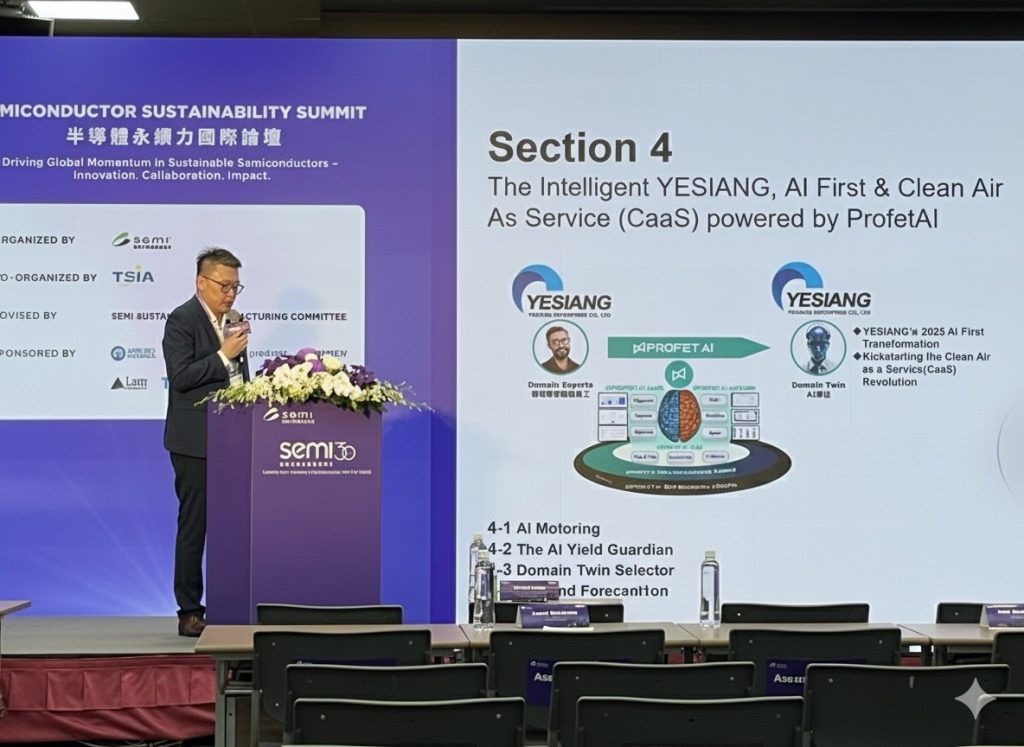
At the 30th anniversary of SEMICON Taiwan, Yesiang—a leader in chemical filtration—announced its dual strategy of “Regenerative Manufacturing + AI Data Governance.” Together with AI startup Profet AI, Yesiang introduced the world’s first Clean Air as a Service (CaaS) subscription model, a revolutionary approach to advanced manufacturing yield assurance and sustainable supply chains.

AI-Empowered Knowledge Transfer Drives the CaaS Innovation Model

Yesiang Chairman James Chuang noted:
“Yesiang holds more than 80% market share in filter manufacturing and has accumulated deep technical expertise. But we have long been asking ourselves: how can we transform from being a ‘consumables supplier’ into a ‘smart service partner’? Our collaboration with Profet AI is a critical step in realizing that vision.”

At the core of the newly launched CaaS subscription service is Profet AI’s Domain Twin™ platform, which systematizes and digitizes cross-departmental tacit know-how into a repeatable, intelligent knowledge-transfer framework. This enables overseas fabs to replicate production capacity quickly—even without senior engineers onsite—while improving overall equipment effectiveness (OEE).

The solution fully digitizes traditional filter management, covering lifecycle prediction, contamination risk monitoring, demand forecasting, and automated scheduling—all AI-driven. With 30-day demand forecasts and automated production planning, customers can operate with zero inventory, cutting total filter usage and ownership costs by 40%. At the same time, the system automatically generates key ESG metrics, enhancing transparency and compliance in sustainability reporting.

AI in Action: Preventing Millions in Losses and Creating Operational Value

The benefits of the CaaS model have already been proven in real-world fabs. In one application, the AI model predicted AMC (Airborne Molecular Contaminant) risks three days in advance and automatically issued replacement recommendations, safeguarding 99.9% yield integrity.

In a real case, this proactive approach prevented a potential multi-million-dollar yield loss. The system also recommends optimal filter specifications and replacement cycles based on process conditions, cutting testing and planning time by 80% and significantly reducing mismatch risks.

Profet AI CEO Jerry Huang said:
“In the era of AI and sustainability, the industry is not just chasing efficiency—it is pursuing the seamless integration of yield, resilience, and ESG. Our Domain Twin™ platform was built to deeply combine domain know-how with AI technology. This collaboration with Yesiang is a benchmark case showing how AI can deliver tangible business value for sustainable supply chains.”

Looking Ahead: Building “Never-Retiring” Knowledge Assets to Accelerate Transformation

Yesiang emphasized that the true key to AI adoption lies in company culture and team mindset. Through its partnership with Profet AI, the company is transitioning from a passive supplier to an active consultant that creates value for customers.

Looking ahead, both companies will continue to advance their dual-axis strategy of “AI Data Governance” and “Regenerative Manufacturing,” while expanding the CaaS model to major semiconductor hubs in the United States, Japan, and Europe.

Profet AI will also further develop Domain Twin™ applications, helping manufacturers digitize and systematize the tacit know-how of senior engineers—turning it into “never-retiring knowledge assets.” In doing so, the company aims to accelerate global manufacturing toward a new era of data-driven, zero-carbon intelligent production.

Redefining Semiconductor Sustainability: Profet AI and Yesiang Unveil First-Ever CaaS with Domain Twin™ Read More »