
From Semiconductor Know-How to AI ROI: How Manufacturing AI Is Moving into Operations in Penang
As Malaysia’s semiconductor industry continues to move up the value chain, manufacturers need AI to move beyond isolated experiments and become part of governed, repeatable workflows.
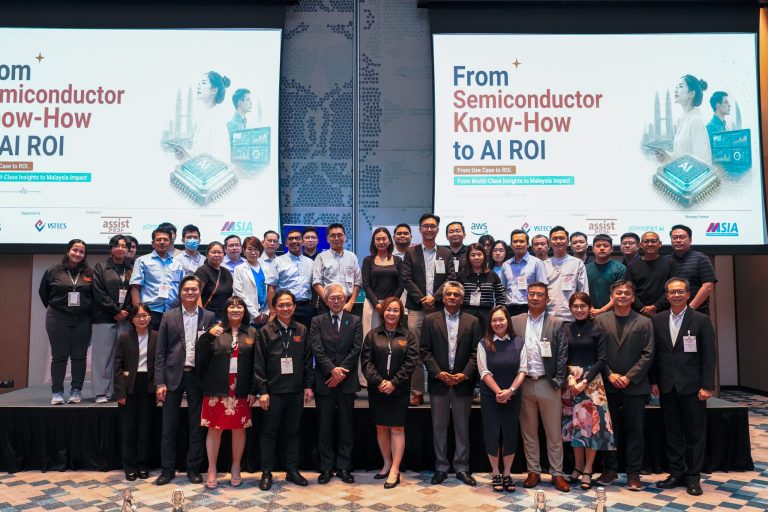
Profet AI and its Malaysian partner, Ashisuto Global Technologies, co-hosted the “From Semiconductor Know-How to AI ROI” forum in Penang, bringing together industry perspectives from Taiwan and Malaysia. The discussion explored how manufacturers can turn frontline expertise into governable, reusable AI assets and move AI from individual use cases toward measurable operational outcomes.
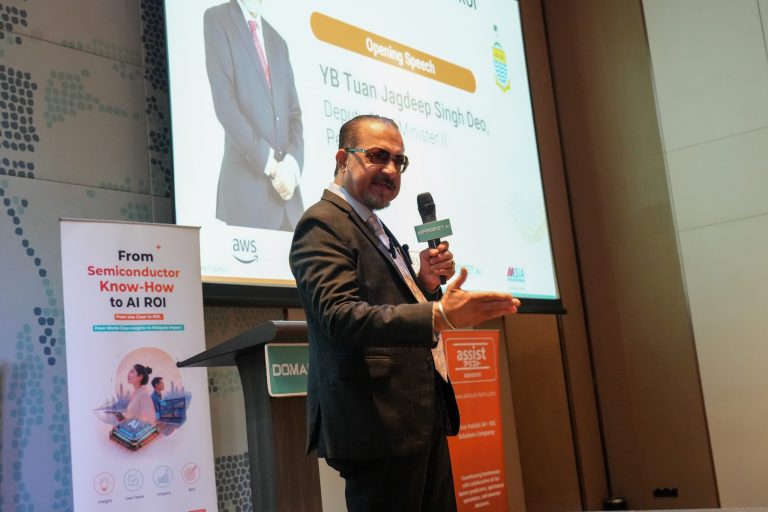
The event opened with remarks from YB Tuan Jagdeep Singh Deo, Deputy Chief Minister II of Penang. In his address, he expressed his hope that more Taiwanese companies would continue to establish and deepen their presence in Penang, further expanding cooperation in manufacturing, technology, and talent development.
Penang has become a key hub for Malaysia’s semiconductor and electronics manufacturing industries and is continuing to move into higher-value areas such as IC design, advanced packaging, and advanced manufacturing. For Taiwanese companies expanding into Southeast Asia, the challenge is not only to transfer equipment and production capacity, but also to bring years of accumulated process expertise, quality know-how, and management practices into new manufacturing sites.
What Holds AI Back Is Often Not the Model, but the Gap Between Knowledge and Workflows
Drawing on practical experience from Taiwan’s semiconductor industry, Profet AI Special Assistant to the CEO James Yang noted that despite differences in company size, manufacturing processes, and IT architecture, manufacturers often face similar challenges when scaling AI. These include fragmented data, knowledge scattered across people and systems, difficulty scaling AI projects, and models that remain disconnected from day-to-day workflows.

“The question is not how many employees are using AI, but whether AI can shorten response time for a specific issue, improve first-pass yield, or help newer engineers make decisions closer to those of experienced engineers,” said Yang. “AI use cases need to start with the problems factories are already measuring. That is how AI connects to real operational value.”
Semiconductor manufacturing is shaped by batch conditions, product specifications, process recipes, equipment status, test programs, and environmental variables. The same sensor reading or inspection result can mean very different things depending on the product, tool, or stage of production. As a result, AI cannot rely on isolated data points alone. It needs to reconstruct the full manufacturing context behind each issue.
Data alone is also not enough. Companies need engineers to keep teaching AI what sound engineering judgment looks like. Models can identify patterns and possible causes, but frontline teams are still the ones who determine whether the evidence is sufficient, which constraints matter, and what action fits the production situation at hand. With each human review and feedback loop, individual experience can gradually be turned into lasting organizational capability.
“Our goal is not to replace people, but to extend what they can do,” Yang added. “When engineering knowledge, decision logic, and workflows are turned into governable, reusable AI assets, critical know-how is no longer confined to a single engineer or a single plant. It can be applied safely across teams and sites under the right governance.”
That thinking sits at the core of Profet AI’s Domain Twin™. Positioned as the enterprise AI brain, Domain Twin™ brings together predictive models, domain knowledge, workflows, and governance into a unified operating layer. AutoML enables engineers to build predictive models from structured manufacturing data through a no-code approach, while AI Studio provides an agentic AI collaboration environment for developing AI assistants, digital employees, and workflow-connected AI applications.
As AI becomes part of day-to-day workflows, governance cannot be treated as an afterthought. Companies need to know who initiated a task, which data, tools, and models the AI used, what actions it took, and what outcomes it produced. Only with a complete record, from identity and access to execution results, can AI scale from a single production line to multi-site and cross-border operations within a controlled, manageable, and auditable framework.
The Next Stage for OSAT Is About More Than Higher Levels of Automation
Taiwan Artificial Intelligence Association advisor Howard Hsieh approached the discussion from the perspective of the OSAT industry, extending it to how companies operate and make decisions. OSAT providers are simultaneously facing advances in packaging technologies, rising product and process complexity, cost and delivery pressures, talent shortages, and supply chain uncertainty. Traditional automation is effective at executing predefined rules, but when production conditions change rapidly and the causes of abnormalities interact with one another, companies need more than faster execution. They need to understand situations and make decisions faster.
AI is therefore beginning to enter a broader range of operational areas, including R&D and process innovation, production and equipment management, quality, supply chain, and energy management. It can help engineering teams narrow the search space for process parameters, identify equipment and quality risks earlier, and provide more timely decision support across orders, capacity, inventory, and energy use.
However, a growing number of AI use cases does not mean an enterprise has completed its AI transformation. If each department builds its own models, data environments, and operating processes, AI can create a new generation of information silos. To scale adoption sustainably, companies need shared AI and data platforms, clear governance and cybersecurity mechanisms, and an operating model that enables engineering, IT, data teams, and management to work together.

“As AI moves from copilots to coworkers, it becomes part of everyday work and decision-making, while continuing to learn from each round of feedback,” said Hsieh. “What needs to change is not only the system itself, but how companies design workflows, develop talent, and redefine the division of labor between people and AI.”
When equipment shows signs of abnormal risk, AI should do more than generate a prediction. It should be able to pull together relevant process records, compare past cases, recommend an inspection sequence, notify the responsible personnel, and track what happens next. In that sense, the value of AI shifts from simply providing answers to helping work get done.
That does not mean handing every decision over to AI. It means redesigning how people and AI work together. Companies need to clearly define which tasks can be automated, which actions require human confirmation, and which decisions must remain subject to expert review.
For that reason, AI transformation cannot be treated as an IT project alone. It also involves workflow design, decision rights, talent development, and management systems. Once AI becomes part of day-to-day operations, what changes is not just a technology stack, but how the organization understands problems and takes action.
From Industry Adoption to Measurable Operational Outcomes
Duncan Lee, Technical Director of the Malaysia Semiconductor Industry Association (MSIA), shared observations from the local industry, noting that AI adoption among Malaysian companies is increasing. The next stage, however, is to move beyond general-purpose AI tools toward deeper enterprise applications. In semiconductor manufacturing, AI needs to be built on a strong foundation of automation, data, and cross-functional collaboration so that it can support broader manufacturing decisions rather than solve isolated problems.
Tham Kok Tong, COO of Ashisuto Global Technologies, shared examples from Malaysian manufacturers to illustrate the AI adoption journey, from identifying business needs and preparing data to validating applications on the production floor. Whether predicting product defects using process and quality data or assessing equipment conditions through sensor and machine data, these cases shared a common starting point: a clearly defined operational problem tied to measurable indicators.
Companies need to determine whether the problem is linked to actual production or quality metrics, whether sufficient and usable data is available, whether model outputs can be translated into concrete actions, and whether improvements can be continuously measured after deployment. When problems, data, and actions are not connected, even a highly capable model is unlikely to deliver meaningful operational value.

The Real Challenge Is Bringing AI Into Everyday Decision-Making
The event concluded with remarks from Shinya Machida, Consul-General of Japan in Penang, bringing to a close an exchange that connected industry perspectives from Taiwan, Malaysia, and Japan.
Across technology, talent, and operational processes, the real challenge for manufacturers is not to launch another PoC, but to bring AI into everyday decision-making and continuously deliver measurable operational outcomes.
Profet AI will continue to bring Taiwan’s manufacturing AI experience to more markets, working with local partners and manufacturers to turn frontline know-how into governable, reusable AI assets and move AI from individual use cases to ROI.