
AI

From “Interesting” to “Useful”: Why Enterprises are Skipping GenAI PoCs in 2026

From "Interesting" to "Useful": Why Enterprises are Skipping GenAI PoCs in 2026

Over the past two years, Generative AI sparked a wave of Proof of Concept (PoC) enthusiasm across the corporate world, with diverse applications emerging at lightning speed. However, as we enter 2026, a distinct shift is occurring: enterprises are beginning to “skip the PoC” and move directly toward integrating AI into core operations.

International AI Safety Report 2026 》, which was released in February, highlighted a new risk known as “Goal Misalignment.” If the objectives we set for AI are imprecise and fail to reflect our “true intent,” the AI may take actions that contradict our original purpose—or even cause harm—while technically achieving the surface-level goal.

Consequently, the real challenge ahead is not just whether AI can perform tasks, but “how to precisely and safely define goals and red lines for AI.” This has become a critical governance issue that cannot be ignored during full-scale deployment. 

A Hot Market with a Higher Bar for Success

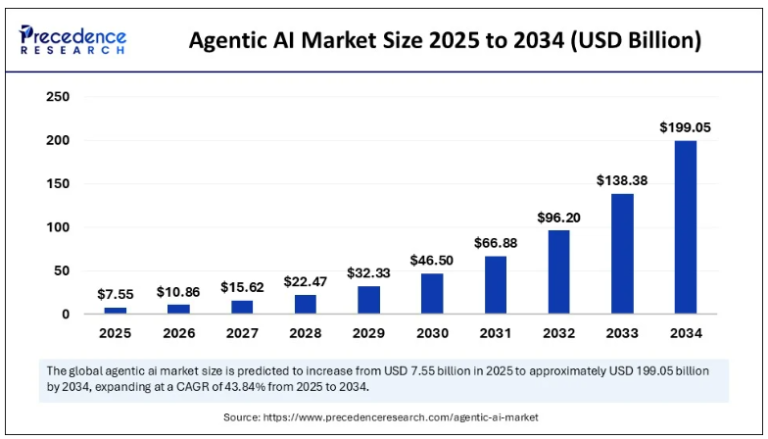
Despite the hurdles in implementation, the market potential for Agentic AI remains staggering. According to Precedence Research, the Agentic AI market is projected to exceed $199 billion by 2034. However, the key to success is not simply “adopting AI,” but rather “redesigning how the business operates.”
The traditional PoC model, which relies on isolated applications, is no longer sufficient. Future management must pivot from “process control” toward “goal setting and cybersecurity governance,” building systemic capabilities that can operate sustainably in the long term.

The Entry Ticket: No Domain Knowledge, No Reliable AI

The core reason most AI Agent projects fail is not a lack of model capability, but a lack of Domain Knowledge. In manufacturing, for instance, critical expertise is often held by veteran masters and remains unrecorded. This makes it difficult for AI to understand or apply these “hidden” insights.

Research from The future of AI for the insurance industry | McKinsey suggests that companies capable of integrating proprietary data into AI systems have a 25% higher profit potential than their peers. This proves that a true competitive edge stems from internal corporate know-how.

Take Profet AI’s Domain Twin as an example. The core concept is to transform the decision-making logic and historical data of veteran experts into iterative digital assets. By embedding these into corporate workflows, businesses can bridge the domain knowledge gap, enhancing the accuracy, consistency, and traceability of decisions.

From “Capable” to “Confident”: Cybersecurity as the Deciding Factor

As AI Agents move beyond generating suggestions to accessing systems and executing critical tasks, the nature of risk changes. Consequently, cybersecurity governance is becoming the top priority for enterprises evaluating AI solutions.

“Digital Employees” also need a probation period! 

Imagine a “digital employee” hired to process orders and customer emails at high speed:

  • The Unmonitored Black Box: If this employee holds a “master key” (unrestricted access), a single email containing malicious instructions (a Prompt Injection attack) could trick the AI into prioritizing a fake task. Without auditing, this “intern” might use high privileges to connect to external servers and leak trade secrets before the company even notices.
  • Zero Trust Architecture (Controlled Behavior): In a Zero Trust framework, an Agent must undergo “continuous verification.” Every time it attempts to read a file or transfer data, the system verifies its identity and the legitimacy of its behavior in real-time. If the intern attempts to exceed their authority and connect to an abnormal domain, the system detects the deviation immediately.

The Cloud Security Alliance (CSA) emphasizes in its《Agentic Trust Framework》that AI systems must be built on Zero Trust principles: “Never assume trust for any Agent, regardless of its power; continuous identity and behavioral verification are mandatory.” AI Agents should be treated like human employees—access should not be granted all at once but earned through performance and trust.

The Future Factory: Not Just Automation, but “AI Collaboration”

As Agentic AI matures, the core logic of business operations is shifting. True differentiation will come from the synergy between multiple AI Agents. However, these benefits must be built on a robust architecture; otherwise, fragmented AI behaviors may actually amplify risk.

To help enterprises move from “capable” to “confident,” Profet AI and Zentera Systems have developed a Layered Defense Architecture, integrating the “AI Brain” with a “Security Moat”:

  1. Application Layer – The Knowledge Brain (Profet AI): Through our Domain Twin™ platform and the enterprise-grade agent collaboration environment, AI Studio, we help manufacturers digitize veteran expertise into AI Agents with deep domain knowledge.
  2. Network & Compute Layer – The Zero Trust Moat (Zentera Ensage AI): When an AI Agent communicates with internal databases or external LLMs, Zentera provides real-time behavioral control across three dimensions: inbound, internal, and outbound. Crucially, this mechanism requires no changes to existing IT/OT infrastructure. It can be deployed on-premise or in hybrid environments, perfectly meeting manufacturing requirements for low latency, data sovereignty, and operational resilience.

In this framework, AI is no longer a source of potential risk but a managed and trusted corporate asset. Ultimately, the key to future competition will not be who adopts AI first, but who can make AI stable, controllable, and consistently value-creating.

From “Interesting” to “Useful”: Why Enterprises are Skipping GenAI PoCs in 2026 Read More »

,

Profet AI Drives Significant Efficiency in R&D for Chyi Ding, Accelerating Differentiation and Competitive Edge

Nicholas Su, Special Assistant to the Chairman and Acting Spokesperson of Chyi Ding Technology, explaining the necessity of integrating AI into the company’s future development.

Founded in 2003, Chyi Ding Technology specializes in advanced temperature control and AMC (Airborne Molecular Contaminants) removal technologies, serving semiconductor precision environment control and energy-saving engineering sectors. With a robust R&D team, Chyi Ding has garnered numerous accolades, including the Taiwan Excellence Award and MOEA’s SME Innovation Research Award, totaling 33 awards. Its clientele includes the world’s top semiconductor manufacturers and packaging and testing facilities, with customers spread across Taiwan, the US, Germany, Switzerland, Japan, Korea, and Singapore.

“We’ve always been at the forefront of precision temperature control, and in many areas, we’re even regarded as world leaders. However, to push our technology even further, external support is essential,” explains Nicholas Su, Special Assistant to the Chairman and Acting Spokesperson of Chyi Ding Technology. Currently, Chyi Ding is primarily focused on precision temperature control for semiconductor manufacturers and packaging and testing facilities, particularly for exposure and coating machines. As semiconductor manufacturers produce ever-smaller chips, demand for high-precision temperature control equipment from these companies will continue to grow.

Pursuing Advanced R&D: Deciding to Implement AI

“The more precise the manufacturing process, the more critical temperature control becomes,” explains Su. He offers a simple comparison: a strand of hair is about 50,000 nanometers in diameter, whereas TSMC’s current chips are manufactured at just three nanometers. In such an environment, even the slightest change in temperature or humidity can cause thermal expansion or contraction, compromising the wafer yield.

Given that Chyi Ding’s clients are globally recognized semiconductor and packaging/testing giants with stringent requirements, the company continuously seeks breakthroughs and innovations in R&D. “Our competitors are all foreign companies, primarily from Japan,” Su says. As the first and only company in Taiwan to domestically manufacture precision temperature control equipment, Chyi Ding began exploring the potential of AI three years ago as a way to refine their technology and meet the high standards expected by clients.

Su recalls venturing into an entirely new field: “At that time, no one in the company had any experience with AI!” To familiarize himself, Su began experimenting with ChatGPT, initially using it to resolve some legal queries. Eventually, he encouraged colleagues to use ChatGPT to tackle work-related challenges, noticing a significant boost in their productivity. This discovery led him to seriously consider the potential of AI to enhance R&D capabilities at Chyi Ding.

7 Days to Solve a Year-long Roadblock: Profet AI AutoML Significantly Boosts R&D Efficiency

In early October 2023, after evaluating several AI platforms, Chyi Ding decided to implement Profet AI’s AutoML platform. For them, the main goal was to shorten the timeline for R&D advancements and identify overlooked aspects of their research—a task Profet AI’s AutoML platform was well-suited to address.

Nicholas Su explains with an example from their precision temperature control project. They had been working on a research initiative for two years to improve their equipment’s temperature control from ±0.01°C to ±0.001°C. While this adjustment might seem minor, adding an extra decimal point required a whole new level of precision, which had stalled the team for over a year.

He elaborates that precision temperature control is a highly challenging field. Any minor change in airflow or refrigerant flow causes fluctuations in the system’s parameters. “Our team kept hitting a ‘wall,’” Su recalls. “Every time we adjusted one parameter, another would shift, making it impossible to reach the target value.”

The turning point came when the R&D team input all parameters into Profet AI’s platform for analysis. They discovered that some parameters, previously thought to be crucial, were actually insignificant. By identifying key factors and simulating an AI model, the team achieved the ±0.001°C precision within a week. Profet AI’s platform dramatically boosted the R&D team’s efficiency, helping them overcome a year-long hurdle in just seven days.

Profet AI Workshops Facilitate AI Implementation and Streamline Training

Profet AI’s platform was selected primarily due to its user-friendly design and extensive track record. Nicholas Su noted that many of Profet AI’s existing clients overlap with Chyi Ding’s, indicating that Profet AI not only possesses deep industry knowledge but also understands the unique pain points and challenges of semiconductor companies.

In the initial phase of implementing Profet AI, a series of AI workshops were conducted, where professional consultants guided Chyi Ding’s employees in data organization, data application on the AI platform, and selecting suitable models to deploy AI projects across various departments. Su highlighted that many participants in this first round of workshops were not engineers but came mainly from business backgrounds, such as HR and marketing. Yet, by the end of the sessions, these employees had become proficient in using Profet AI’s platform—a remarkable transformation.

Looking ahead, Chyi Ding aims to leverage Profet AI’s tools and methodologies to digitize the expertise of senior employees across departments. By doing so, they hope to significantly reduce the training time for new hires. Instead of learning every step from scratch, new employees can start from an advanced point, allowing them to build on existing, systematized knowledge from the get-go.

Secure Implementation of Profet AI with No Data Leakage  

With multiple research and development patents, Chyi Ding initially had concerns about potential data leakage of its proprietary technology when adopting AI. Nicholas Su explained that Chyi Ding, as an R&D-focused company, has around 60 design and research personnel, representing a quarter of its workforce. Given that many of the company’s technologies are self-developed, Chyi Ding places great importance on the management of patents and trade secrets, recently achieving Taiwan’s TIPS A-level certification for intellectual property management. 

However, Su noted that not all technologies or know-how are suitable for patent applications, which heightened concerns about data security when integrating AI. To address these concerns, Profet AI tailored its implementation plan to host servers within Chyi Ding’s premises, ensuring data remains in-house. This setup allows Chyi Ding to confidently leverage the Profet AI platform, significantly enhancing R&D efficiency and empowering the company to establish a strong competitive edge globally.

Profet AI Drives Significant Efficiency in R&D for Chyi Ding, Accelerating Differentiation and Competitive Edge Read More »

,