部落格

From U.S. Tariffs to Resilience: Scaling Smart Manufacturing with Domain Twin

From U.S. Tariffs to Resilience: Scaling Smart Manufacturing with Domain Twin

Insights from Profet AI’s Frontline Experience on How Manufacturers Can Navigate Uncertainty

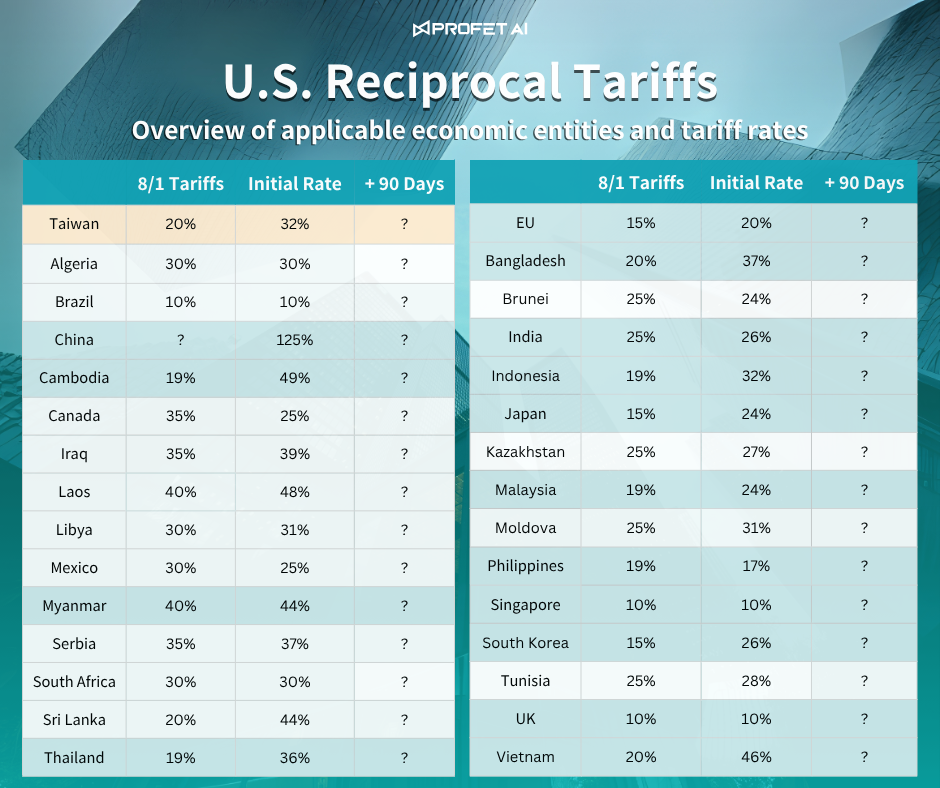
The United States recently implemented reciprocal tariff adjustments under Section 301 of the Trade Act, imposing additional tariffs of up to 20% on a range of Taiwanese exports. These include critical electronics manufacturing components such as chips, IC packaging materials, and PCB parts, significantly increasing cost pressures on Taiwan’s high-tech industries in the U.S. market. In particular, semiconductor products face tariffs as high as 100% unless they are manufactured at facilities located in the United States, prompting serious concern within the industry about the potential impact.

Through extensive conversations with semiconductor and electronics manufacturing clients, Profet AI has observed a growing consensus:
Even with production lines currently running at full capacity, manufacturers recognize the urgency of developing replicable, transferable process capabilities to address rising costs, shifting orders, and global customer demands—ultimately strengthening operational resilience.

The Semiconductor Industry’s Current Challenges: The Impact of Non-Exemption

Taiwan Still Excluded from Exemptions – Cost Pressures Escalate

Under the updated U.S. tariff policy, many high-tech products exported from Taiwan—including chips, materials, and key electronic components—now face a 20% duty.
While several Asian countries have been able to negotiate lower tariff rates, Taiwan remains subject to 20% tariffs, reducing the price competitiveness of domestic manufacturers in the U.S. market.

Rising Risk of Order Shifts and Diversified Supply Chain Requirements

To reduce overall supply chain costs and risks, many U.S. brand customers are asking suppliers to relocate their production to the U.S. to deal with the cost that may arise with the new tariff rates —intensifying pressure on Taiwanese manufacturers to diversify their global footprint.

Knowledge Transfer Remains a Bottleneck

Many high-tech manufacturing processes still rely heavily on the tacit knowledge and on-site judgment of experienced personnel.
Even with overseas expansion plans in place, manufacturers often struggle with incomplete knowledge transfer and inconsistent process stability, resulting in prolonged ramp-up periods and challenges in achieving reliable yields.

Domain Twin™: Building Transferable Manufacturing Strength to Address Tariff and Order Shift Pressures

Profet AI’s experience working with manufacturing clients reveals that true resilience lies not simply in relocating production, but in the ability to replicate core manufacturing capabilities quickly and effectively across locations.
Faced with rising tariffs and shifting customer demands, manufacturers that proactively develop transferable process intelligence are better positioned to maintain delivery reliability and retain long-term customer trust.

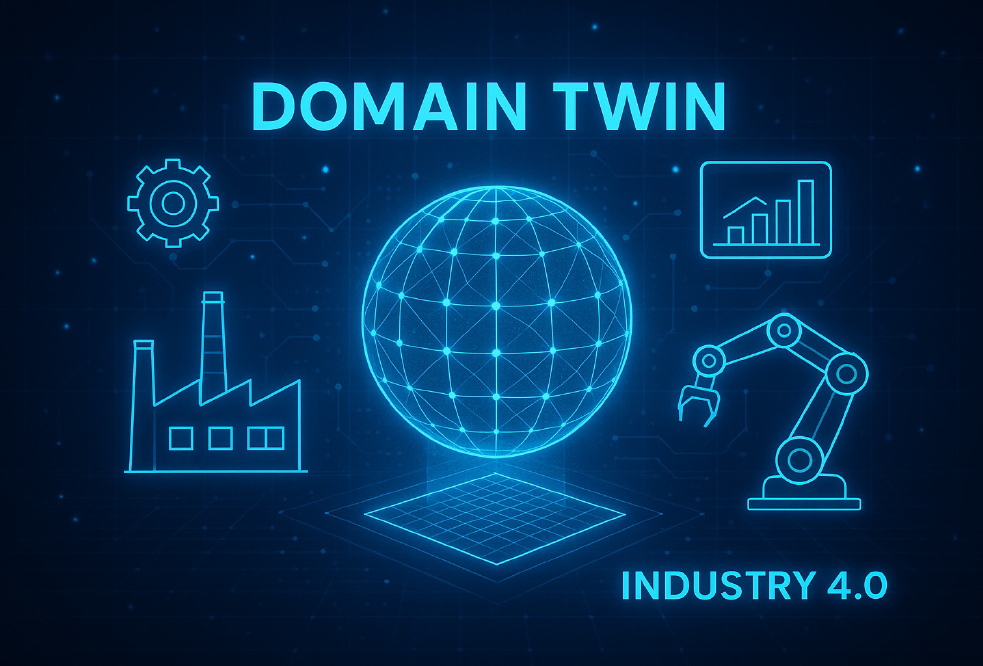
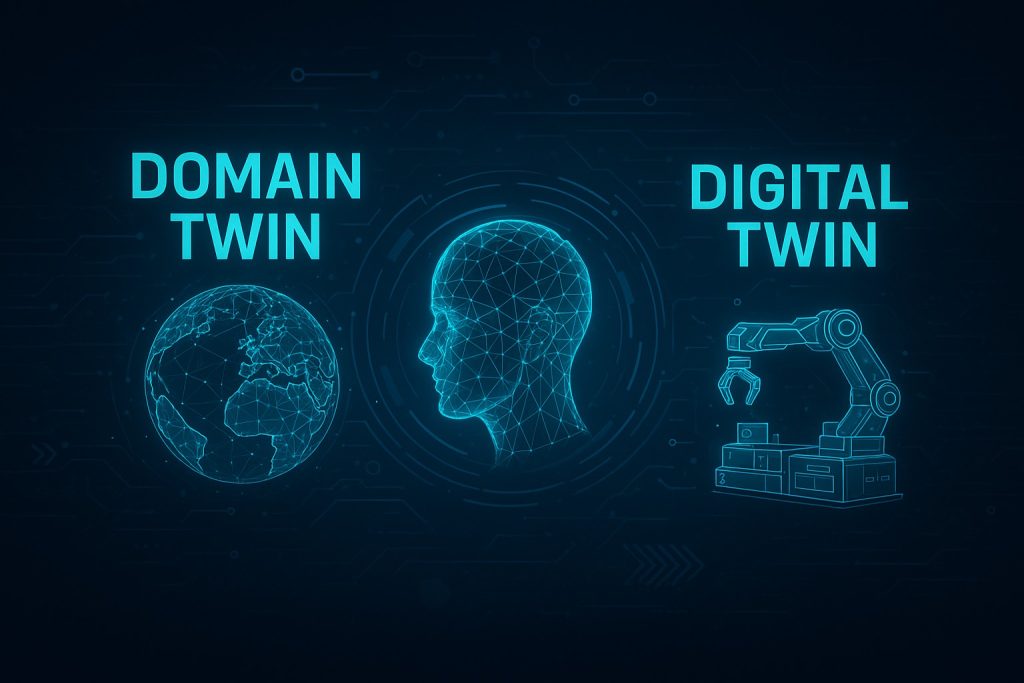
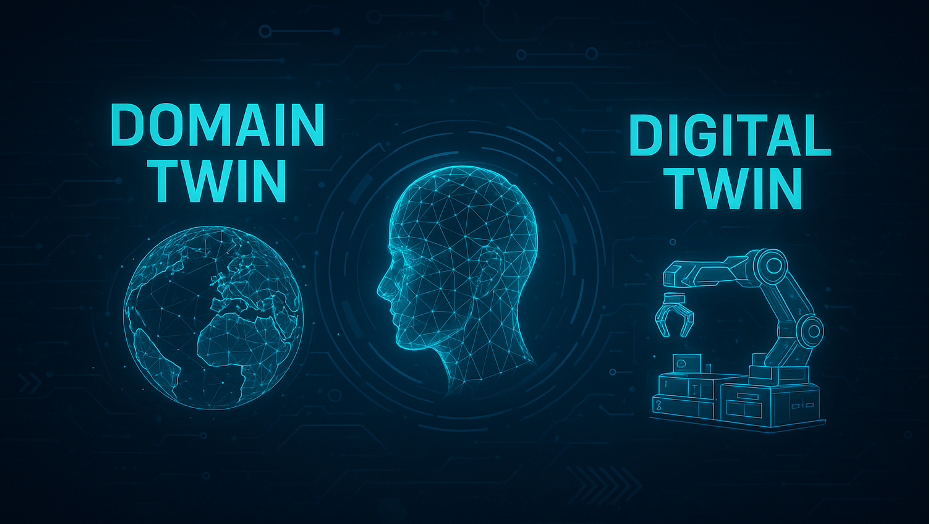
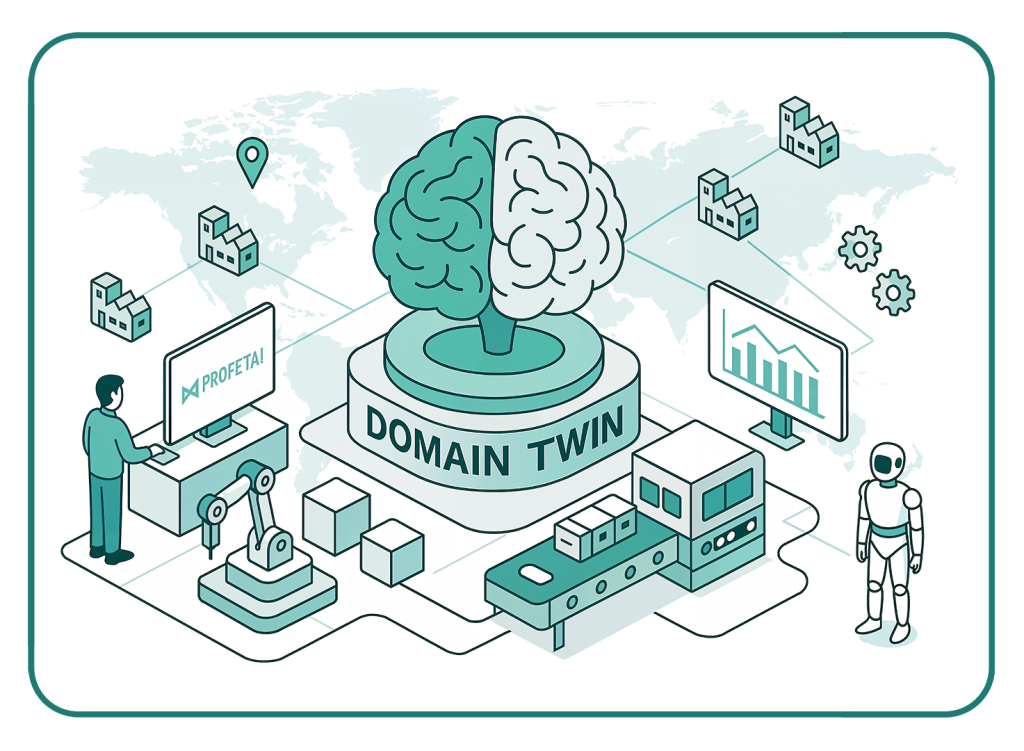
Our solution: Domain Twin™. This technology transforms critical manufacturing knowledge into replicable, deployable digital assets—enhancing consistency and efficiency across multi-site operations.

1. Digitizing Process Knowledge to Enable Replication

Domain Twin™ helps manufacturers capture and structure operational experience, parameter logic, and exception handling procedures into unified digital models—allowing tacit know-how to be standardized, managed, and applied across different production environments.

2. Cross-Site Simulation for Layout and Transfer Optimization

By simulating different regional production conditions, cost structures, and equipment configurations, Domain Twin™ enables enterprises to accurately assess transfer risks and investment requirements, accelerating decision-making and deployment.

3. Reducing Ramp-Up Time and Stabilizing Yields at New Sites

With standardized procedures and data-driven recommendations, new facilities—even those with limited experienced staff—can rapidly adopt proven process logic. This shortens time-to-yield and improves early-stage productivity and consistency.

Tariffs Are Just the Beginning—The Real Challenge Is Scaling Capability

The U.S. retaliatory tariff policy is just one part of the broader transformation pressure facing the industry.
As geopolitical tensions and trade policy uncertainties continue to grow, manufacturing competitiveness will increasingly depend not just on technical expertise, but on the ability to swiftly transfer, replicate, and stabilize operations globally.

Profet AI’s Domain Twin™ enables manufacturers to convert tacit knowledge into explicit, repeatable assets, empowering organizations to adapt rapidly, deploy efficiently, and scale manufacturing capabilities with confidence.

If you would like to know more about how our Domain Twin can help you tackle manufacturing challenges, contact Profet AI to schedule a consultation with our experts.

From U.S. Tariffs to Resilience: Scaling Smart Manufacturing with Domain Twin Read More »

Profet AI Launches ‘Domain Twin’ AI Platform to Secure Critical Manufacturing Technologies and Strengthen Global Supply Chains

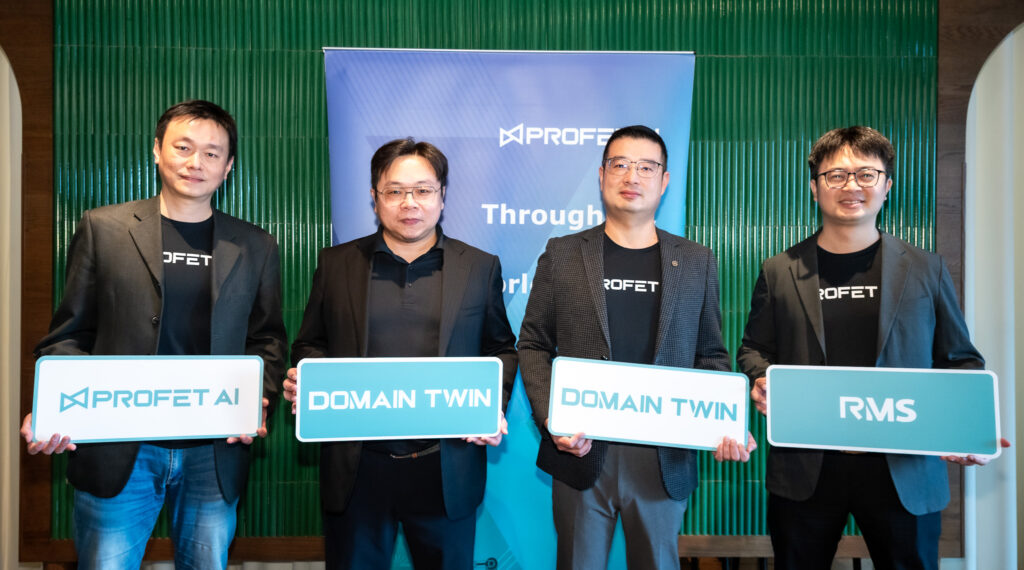
Profet AI, a Taiwan-based artificial intelligence company, today announced the launch of Domain Twin, an AI-powered solution designed to help manufacturers protect critical technologies, optimize supply chains and enhance global competitiveness. The launch comes amid a period of rapid transformation in the global semiconductor industry, underscored by TSMC’s recent announcement of a $100 billion investment in Arizona to build fabrication plants. As companies accelerate international expansion, they face growing challenges, including technology transfer, supply chain restructuring and rising operational costs. Profet AI’s Domain Twin aims to help manufacturers navigate these shifts while maintaining operational efficiency and safeguarding intellectual property.

“With increasing globalization and the restructuring of supply chains, companies must find ways to secure their competitive advantages while ensuring long-term sustainability,” said Jerry Huang, co-founder and CEO of Profet AI. “The ‘Domain Twin’ AI platform empowers manufacturers by digitizing domain expertise, facilitating knowledge transfer, and driving AI adoption across industries.”

Addressing Industry Challenges with AI-Powered Solutions

The manufacturing industry faces growing concerns over technology migration, supply chain disruptions, and rising operational costs. Profet AI’s ‘Domain Twin’ solution directly addresses these challenges:

  • Preventing Technology Leakage: Ensures that critical research, production, and quality control data remain within the company.
  • Optimizing Supply Chains: AI-driven analytics provide real-time market insights, enabling better inventory management and production planning.
  • Enhancing Global Competitiveness: AI-powered automation and no-code tools allow businesses to scale operations efficiently.

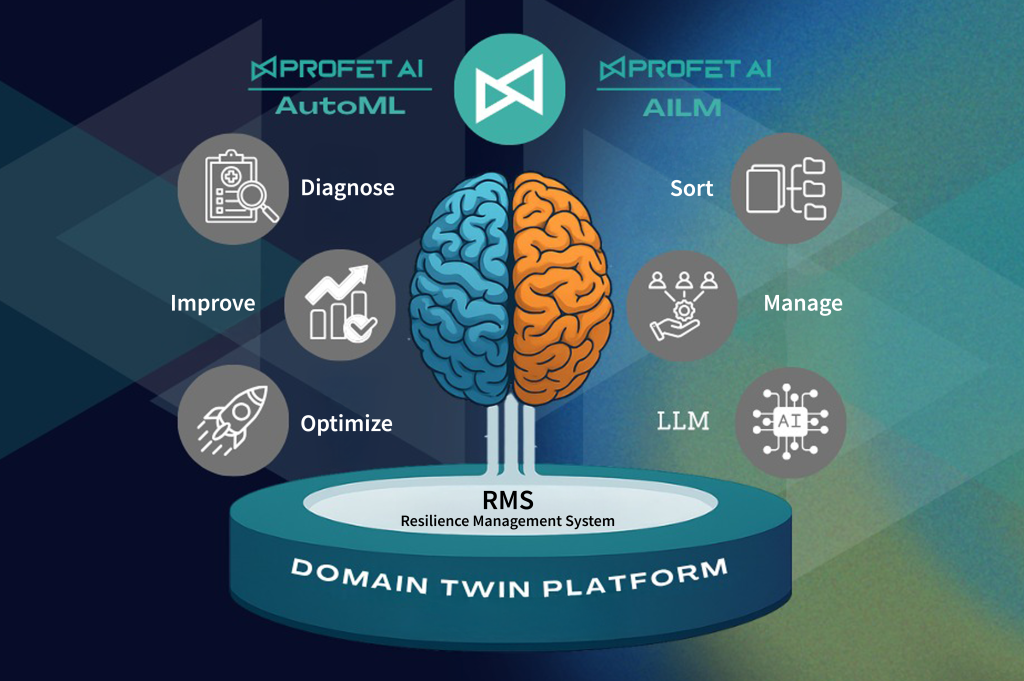
The platform is designed to empower 80% of a company’s core workforce by equipping them with AI capabilities, transforming them into next-generation AI-enabled professionals. Through AutoML (Automated Machine Learning) and AILM (AI Lifecycle Management), employees can build predictive models and accelerate AI deployment without extensive technical knowledge.

Rapid Deployment with No-Code AI Technology

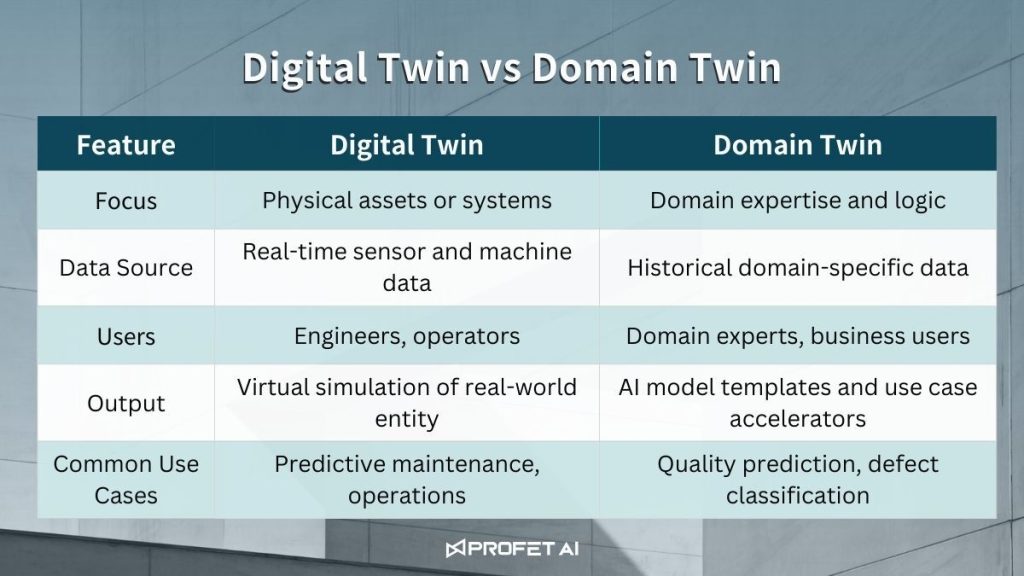
Unlike traditional digital twin systems that require extensive customization, ‘Domain Twin’ utilizes a No-Code AI platform for fast implementation. This approach reduces deployment time and allows manufacturers and supply chain partners to adapt quickly to evolving market demands.

“By integrating AI across operations, companies can make more informed decisions, reduce dependency on specific markets, and create a more resilient global supply chain,” Huang added.

Profet AI Launches ‘Domain Twin’ AI Platform to Secure Critical Manufacturing Technologies and Strengthen Global Supply Chains Read More »

8 Ways that Taiwan Manufacturers are Using AI to Navigate Economic and Geopolitical Uncertainty

Geopolitical chaos and a looming economic downturn are a growing concerns for manufacturers, given their complex and global operations. Recent threats faced to supply chains, include inflation, trade disputes, war, pandemics, and energy access. A push for rapid decoupling also creates serious headaches for decision-makers.

Taiwan: The Epicenter of Both Geopolitical Uncertainty and AI Technology 

In the face of these challenges, manufacturers in Taiwan are turning to AI to navigate this increasingly complex global economic landscape. Recently, a four-part summit titled Crossover Talks, organized by manufacturing AI solution provider, Profet AI, brought together industry, academia, and technology experts to discuss the opportunities, challenges, and best practices for manufacturers to implement AI and digital transformation in a challenging economic climate.

Taiwan has some of the most advanced manufacturers in the world and is obviously at the forefront of some of the most worrying geopolitical tensions. It is also at the cutting edge of the technologies that will power the AI revolution, such as semiconductors, which makes it the ideal location for this discussion.

Keynote speakers included experts from AUO, Innolux,Gogoro, Cheng Shin Rubber, Kuan Yuan Paper, Asia Giant Engineering, De Licacy Industrial, Taiwan AI Academy, National Cheng Kung University, National Taiwan University, and Feng Chia University.

8 Takeaways

Profet AI has diluted the four events and hours of discussion into eight key takeaways:

  1. Successful Digital Transformation Requires the Marriage of Data Science and Domain Knowledge

Data science teams in enterprises need to work in conjunction with departments and colleagues with vertical domain knowledge. Profet AI preaches that successful digital transformation relies on the use of the correct data combined with domain knowledge in order to generate the actionable intelligence that can drive decisions.

  1. Prioritize Cross-Department Conversation

For an enterprise to successfully carry out digital transformation, it needs the support of management and effective dialogue and cooperation between departments.

  1. Foster a Habit of Data Collection

For traditional companies to become more data-driven, they need to first start analyzing their existing data and also foster a culture of data collection. Stakeholders need to believe in the power of data to engender change, and there also needs to be an investment in the correct AI tools.

  1. Focus on First Using AI to Solve Key Problems, Not Changing the Whole Company

Companies should avoid seeing AI as a panacea to turn the company around. Instead, they should prioritize specific processes that need to be optimized.

  1. Use AI to Replicate the Knowledge of ‘Old Masters’

Traditional manufacturers often over-rely on the wisdom of senior staff, which makes them vulnerable when processes need to be replicated or there needs to be a handover of know-how if they retire. Data-driven companies can utilize AI to create a framework for both personnel succession and the handover of knowledge.

  1. Let Data Enhance Personnel Management

Participants at the summit complained in recent years, being blighted by worker shortages. Companies can utilize AI to highlight the characteristics of workers that have resigned and which present workers have a high probability of leaving, then reach out to them in advance to see if there is any way to help them.

  1. Manufacturers Need to Recruit and Cultivate AI Talent

For digital transformation to be successful, manufacturers need to change their internal culture and also cultivate their own AI talent. Over the last five years, AUO has trained more than 1,000 AI engineers in a joint initiative with the Taiwan Artificial Intelligence Association (AIA).

  1. Everything Begins with Company-Wide Mindset Change

Director of AIA, Benjamin Kuo, believes that as well as fostering AI talent, there needs to be a mindset change in top management so that the company will become a data-driven organization. Only once the company has both the AI mindset and talent can they really lay the blueprint for digital transformation. Leaders need to ensure that AI is embedded into the DNA of their organizations.

8 Ways that Taiwan Manufacturers are Using AI to Navigate Economic and Geopolitical Uncertainty Read More »

Profet AI Leads the Way: Four Key Strategies for AI Transformation in Businesses Amidst Economic Uncertainty

Amid growing global economic uncertainty, Profet AI Co-founder and CEO Jerry Huang reflected, “Since 2022, we have traveled across Asia and, through exchanges with numerous companies, deeply felt the pressure and challenges they face in talent upgrading and global expansion. These businesses urgently need to understand how AI can help them proactively deploy strategies and make critical decisions. This experience has strengthened my belief that our 2022 Crossover Talks: AI & the Economic Cycle series was crucial in helping companies identify opportunities amid economic cycles.”

Pain Points and Critical Analysis: Hsing-Chien Tuan and Dr. Chia-Yen Lee Discuss Transformation Strategies at Crossover Talks

In Crossover Talks: AI & the Economic Cycle, Hsing-Chien Tuan, Honorary Chairman of Innolux Corporation, highlighted that even in downturns, businesses should focus on automation, IoT, big data, and AI. He stressed, “Identify pain points with precision, articulate them scientifically, and set meaningful indicators.” Dr. Chia-Yen Lee of NTU added that AI must now be integrated beyond manufacturing into R&D, advising businesses to understand core strengths, explore global and cross-industry expansions, and embrace disruptive technologies.

Dr. Chia-Yen Lee, from the Department of Information Management at NTU, offered profound insights from both academic and practical perspectives. He stated, “Recently, while consulting with semiconductor manufacturers, I often mention that we used to only need to modify the manufacturing site, but now we need to involve AI, even in research and development, and the future potential may be even greater.” Dr. Lee proposed four key actions: first, businesses should deeply understand their core competencies and invest in key areas; second, when expanding, consider international layout and cross-industry expansion; third, explore new markets through geographic expansion; and finally, integrate disruptive technologies and establish new businesses or services through mergers and acquisitions, while paying attention to retaining talent and ensuring the long-term value of technology.

Dr. Lee further suggested that businesses should embark on their AI journey from five aspects: accelerating time (building a digital nervous system), increasing efficiency (promoting digital transformation and intelligence), improving quality (building a learning organization and strengthening education and training), increasing revenue (achieving production-sales balance), and reducing costs (reducing variation and risk).

Asia-wide Consensus Spanning Two Years: PacRim Group Shares the Inevitability of AI Transformation from a Thai Perspective

This perspective extends across Asia. At the 2024 AI Leadership Summit in Bangkok, Porntip Iyimapun, CEO of PacRim Group, a pioneer in global leadership development and cultural transformation with nearly 30 years of experience, presented similar views: “Digital transformation, leadership transformation, and corporate culture transformation are all important parts of the same plan. The introduction of AI is inseparable from these transformations. Thai enterprises need to make comprehensive adjustments in these areas to successfully integrate AI into their business strategies. Without adopting AI, enterprises will gradually be eliminated.” It not only reflects PacRim Group’s professional insights in leadership development and cultural transformation but also confirms the core position of AI in modern enterprise transformation.

AI Helps Businesses Address Economic Challenges and Future Growth

In Profet AI Crossover Talks, multiple companies shared successful cases of using AI tools. Brandon Yeh, Vice Chairman of De Licacy, shared how AI can be used to achieve technology transfer and solve talent recruitment difficulties. Richard Hsieh, Associate Manager of Kuan Yuan Paper, introduced an innovative management method combining OKR, zero errors, and AI. Kenny Chiu, Deputy General Manager of Shuttle Service, shared the experience of using AI to predict and reduce employee turnover.

These cases clearly demonstrate the application potential of AI in various industries and fields. From manufacturing process optimization to human resources management, AI is helping businesses address various challenges, improve efficiency, reduce costs, and prepare for future growth.

Profet AI Leads the Way: Four Key Strategies for AI Transformation in Businesses Amidst Economic Uncertainty Read More »

AI Drives Thailand Market Innovation: Taiwanese Expertise Tailors Solutions

Driven by global economic shifts and the digital transformation wave, AI has become a core tool for businesses worldwide to maintain competitiveness. Thailand, with its strategic geographic location and thriving automotive, food manufacturing, and retail industries, presents immense potential and demand. For the first time, Profet AI, in collaboration with HexaTech Solutions and PacRim Group, hosted an AI Leadership Summit in Bangkok, sharing Taiwan’s successful experiences to tailor AI solutions for the Thai market and facilitate talent training and upgrading.

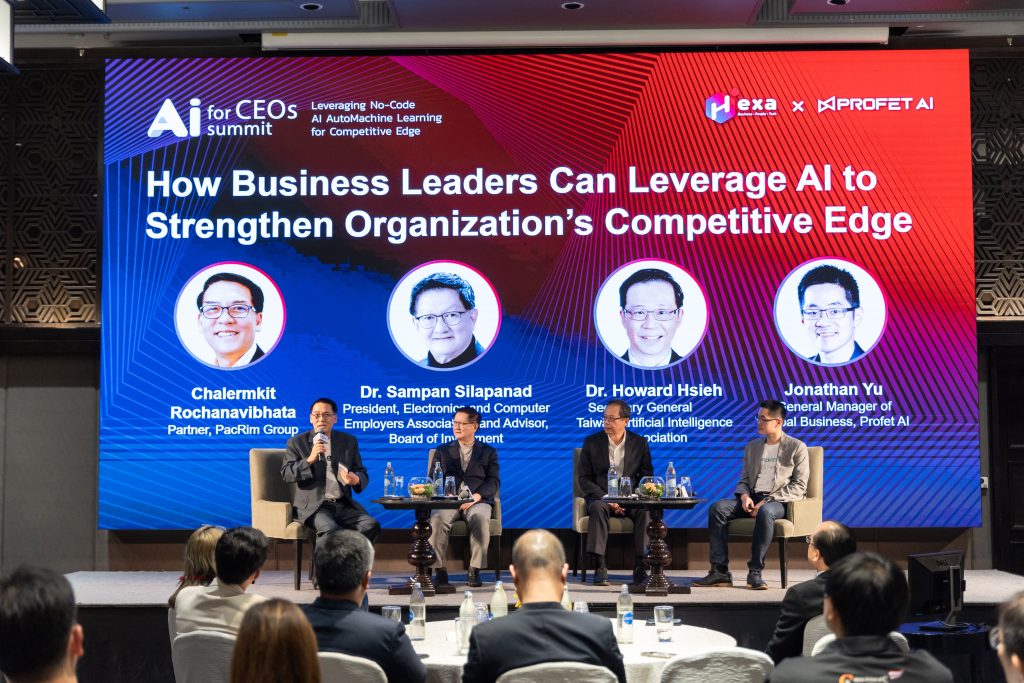
Speakers at the AI Leadership Summit (from left to right: Chalermkit Rochanavibhata, partner at PacRim Group; Dr. Sampan Silapanad, president of the Electronics and Computer Employers Association; Dr. Howard Hsieh, secretary-general of the Taiwan AI Association; Jonathan Yu, global business manager at Profet AI)
Learning from Taiwan’s Success: Three Key Elements of Digital Transformation

Taiwan’s successful digital transformation offers valuable insights. Dr. Howard Hsieh, secretary-general of the Taiwan AI Association, pointed out that AI is not merely an IT project but requires full engagement and talent upgrading. Taking Innolux 4.0’s digital transformation as an example, the integration of technology, methodology, and mindset (organization and people) is crucial. Taiwan’s experience demonstrates that successful digital transformation requires technological advancements, methodological applications, and continuous optimization of organizational culture, enabling the transition from small-scale projects to full-scale implementation and achieving the status of a lighthouse factory.

Thailand’s AI Landscape: Urgent Need for Transformation to Remain Competitive

In Thailand, the urgency of digital transformation has garnered widespread attention. Dr. Sampan, president of the Electronic & Computer Employers’ Association, emphasized that Thai businesses risk being eliminated from the market if they fail to adopt AI swiftly. He stated, “I envision that within the next five years, over 50% of Thai companies will be AI-oriented; otherwise, Thailand will disappear from the map. This will be the key to entering a highly competitive world.” This perspective underscores the decisive impact of AI on the competitiveness of Thai businesses.

Tailored AI Solutions: Creating Custom Solutions for the Thai Market 

To address the specific needs of the Thai market, Profet AI, HexaTech Solutions and PacRim Group have provided tailored AI solutions that not only meet the market’s practical demands but also encompass applications from business innovation to R&D, helping Thai businesses navigate future challenges. Additionally, Porntip Iyimapun, CEO of PacRim Group, added that digital transformation, leadership transformation, and corporate culture transformation are integral parts of the same plan. She emphasized that AI implementation is intertwined with these transformations, and Thai businesses need to make comprehensive adjustments in these areas to successfully integrate AI into their business strategies.

Facilitating Talent Training and Upgrading: Laying the Foundation for Digital Transformation

The success of digital transformation hinges on the skill enhancement of the workforce. PacRim Group, with 30 years of experience, will focus on providing professional training to equip Thai employees with AI skills and foster an AI-ready culture. This will lay a solid foundation for the long-term development of Thai businesses, ensuring that the entire workforce possesses the capabilities required for the AI era. The digital transformation and AI applications of local businesses will set new benchmarks.

AI Drives Thailand Market Innovation: Taiwanese Expertise Tailors Solutions Read More »