From PoC to Governed Deployment: Profet AI and Partners Spotlight Agentic AI as It Moves into Enterprise Operations

Profet AI hosts Crossover Talks in Hsinchu with Taisys, Zentera Systems, and HPE to explore security governance architecture for Agentic AI

As AI evolves from answering questions to acting as AI Agents that can read data, invoke tools, connect systems, and execute tasks, enterprises are facing a new level of cybersecurity and governance challenge.

In the past, enterprise security largely focused on accounts, endpoints, and system boundaries. With Agentic AI, risks may come from a document, an email, a seemingly normal instruction, or an AI Agent granted excessive privileges. For enterprises, the question is no longer only whether AI answers accurately, but whether it can be securely authorized, controlled in real time, fully traced, and audited.

As AI moves from model capability toward operational capability, enterprises are paying closer attention to whether AI can enter business processes under controllable, manageable, and auditable conditions. This is especially critical for semiconductor companies, high-tech manufacturers, and organizations managing sensitive data, process expertise, and mission-critical know-how. For these enterprises, the next priority is not only making AI usable, but making it trusted.

To address this shift, Profet AI hosted “Crossover Talks: A New Standard for Agentic AI Security and Governance” in Hsinchu on May 14, together with TAISYS Technologies(Taisys) , Zentera Systems, and Hewlett Packard Enterprise (HPE). The event explored how enterprises can build stronger security boundaries and governance mechanisms for Agentic AI across platform governance, identity verification, zero trust architecture, and enterprise-grade infrastructure.

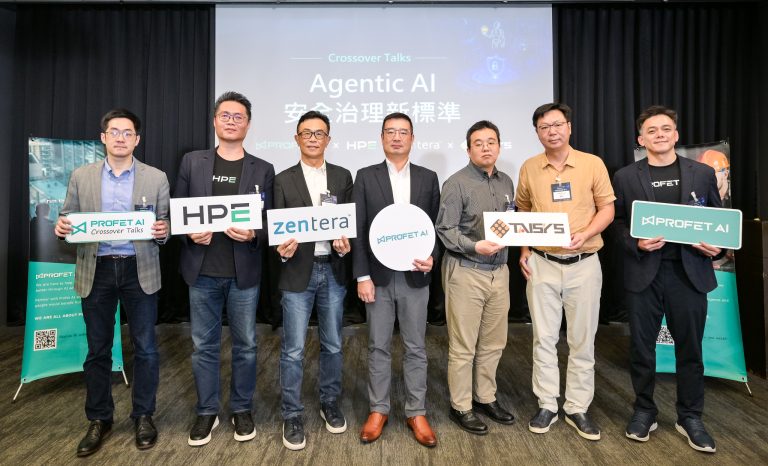
From left: Jonathan Yu, General Manager of Global Sales, Profet AI; Andy Hu, Senior Sales Manager of Compute & Digital Sales, HPE Taiwan; Jeff Tsai, Taiwan Country Manager, Zentera Systems; Jerry Huang, CEO, Profet AI; Jonathan Wu, Manager of Solution Consultant Dept., Taisys; Jun-Hsin Ho, Chairman, Taisys; and James Yang, Special Assistant to CEO, Profet AI.

Jerry Huang, CEO and Co-founder of Profet AI, said:

“The next challenge for enterprises is no longer simply whether they can build AI models. It is whether they can start from their own domain and turn data, processes, and frontline know-how into AI capabilities that truly belong to the enterprise and can be continuously governed. For manufacturers, the key to bringing AI into operations now comes back to governance, control, and knowledge retention.”

Jerry also noted that manufacturing hubs such as Taiwan and Japan are facing the retirement of experienced talent and the risk of knowledge loss. If enterprises do not systematically capture frontline expertise early, they will face greater challenges in process optimization, quality management, and cross-site replication. This is also why Profet AI continues to advance Domain Twin™ — helping enterprises transform know-how scattered across people, equipment, and processes into AI assets that can be retained, amplified, and replicated.

From Standalone Tools to Governance Architecture

James Yang, Special Assistant to CEO at Profet AI, opened his session from the perspective of semiconductor equipment cybersecurity governance. He emphasized that as AI Agents increasingly interact with enterprise systems, equipment, and workflows, companies must look beyond the security of a single model or tool and assess whether the overall AI execution environment is controllable, manageable, and auditable.

James pointed out that the SEMI E187 semiconductor equipment cybersecurity standard, which emphasizes “security by design,” reflects the industry’s focus on equipment security, identity authentication, network segmentation, and operational auditing. In the era of Agentic AI, enterprises need to build governance architecture across the equipment, network, platform, and identity layers to support large-scale AI Agent deployment.

Without consistent identity authentication, permission control, and audit mechanisms, AI tools introduced to improve efficiency may create new risks, including data leakage, incorrect operations, and privilege abuse.

At the platform level, James noted that as internal AI tools, edge AI applications, and agentic tools increase, enterprises need a unified control platform to centrally manage models, tools, knowledge, permissions, and execution records. This allows companies to understand which AI Agents are operating, which systems they are connected to, what data and tools they are using, and whether external skill modules have passed security checks.
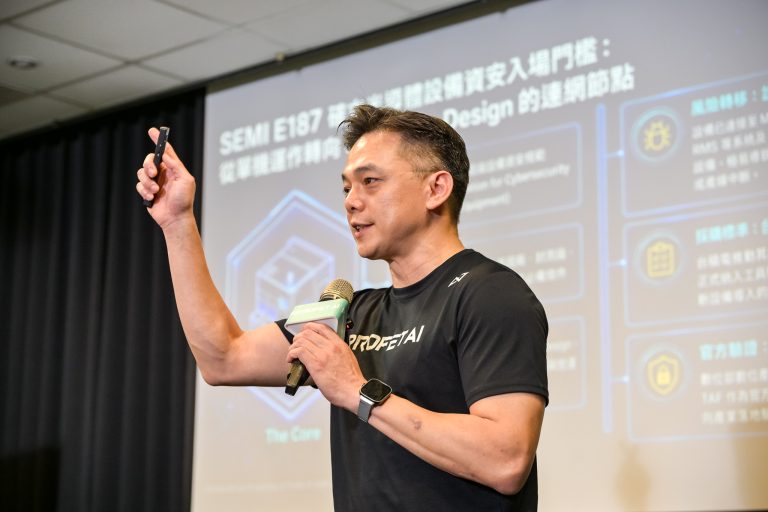
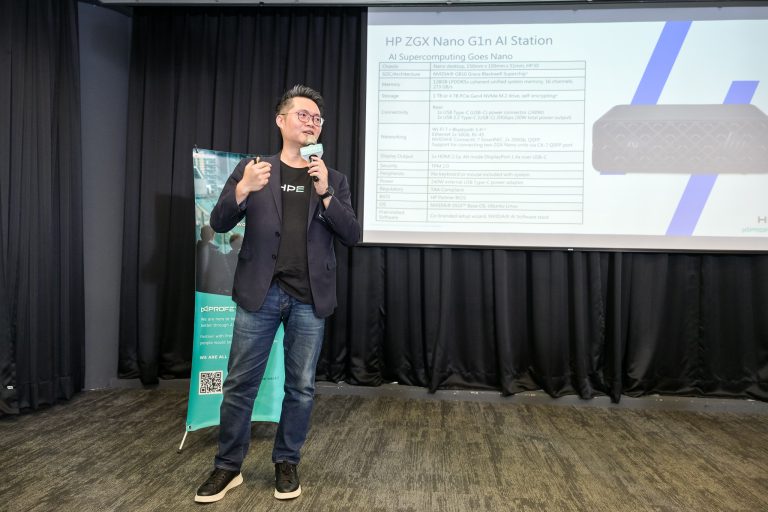
James Yang, Special Assistant to CEO at Profet AI, shares insights on Agentic AI trends and enterprise requirements.

Closing the Governance Gaps: From Identity to Network

From the identity authentication perspective, Jonathan Wu, Manager of Solution Consultant Dept. at Taisys, explained that when AI Agents access systems, execute tasks, or conduct transactions on behalf of users, enterprises must clearly distinguish between human identity and agent identity.

Jonathan emphasized the need for human-in-the-loop authorization. By leveraging identity verification methods based on telecom networks and SIM security mechanisms, enterprises can preserve a final human confirmation point before AI performs critical actions, reducing the risk of misjudgment or unauthorized execution.

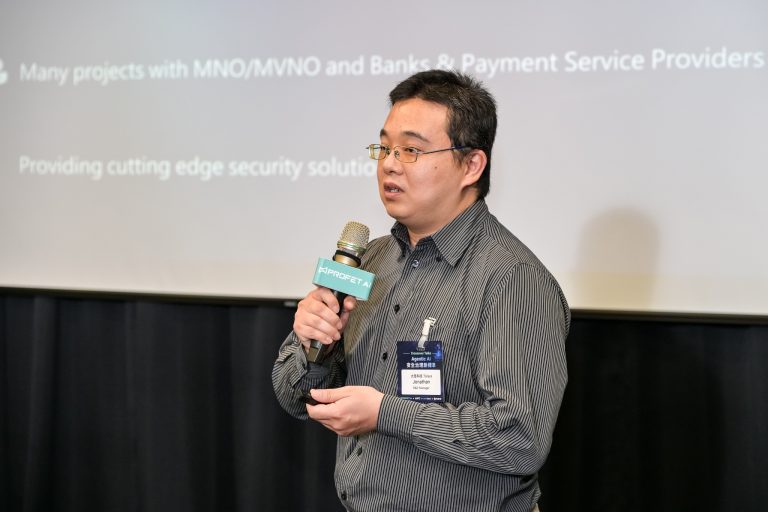
Jonathan Wu, Manager of Solution Consultant Dept. at Taisys, shares insights on identity mechanisms for AI Agents.

From the network governance perspective, Jeff Tsai, Taiwan Country Manager at Zentera Systems, said:

“As AI moves from an assistant tool to a digital worker, enterprises must look beyond functionality. They also need isolation, detection, and traceability. Only by building a controllable network governance architecture can enterprises advance Agentic AI while reducing the risks of uncontrolled behavior and unauthorized access.”

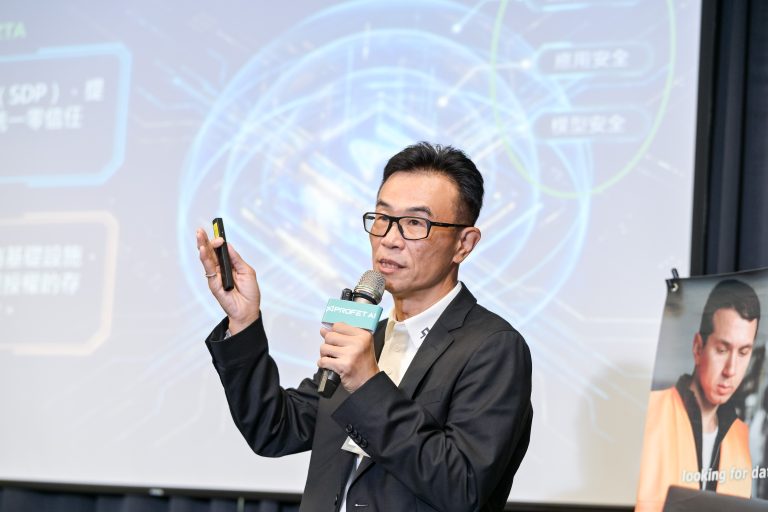
Jeff Tsai, Taiwan Country Manager at Zentera Systems, shares insights on zero trust architecture governance for Agentic AI.

From the infrastructure perspective, Andy Hu, Senior Sales Manager of Compute & Digital Sales at HPE Taiwan, shared that as Agentic AI enters enterprise workflows, companies must evaluate not only application functions and governance mechanisms, but also the computing resources, deployment architecture, and management model behind them.

Andy Hu, Senior Sales Manager of Compute & Digital Sales at HPE Taiwan, shares perspectives on enterprise-grade computing and deployment environments.

For high-tech manufacturers, AI applications can move toward stable, manageable, long-term operations only when platform, network, and infrastructure layers are designed to work together.

Jonathan Yu, General Manager of Global Sales at Profet AI, concluded the event with the idea that “integration wins.” Jonathan noted that enterprises adopting Agentic AI should not focus only on individual tools, but build an integrated architecture across identity, platform, network, and infrastructure.

For manufacturers, the next question is no longer whether to adopt AI, but how to build the governance maturity required for AI to move beyond PoC and enter enterprise operations and decision-making. The next stage of Agentic AI is not simply about deploying more agents, but about building a manageable, replicable, and continuously evolving governance foundation that turns AI into a trusted operational capability.

To learn more about how to build controllable, manageable, and auditable AI governance capabilities, please fill out the form below and our team will get in touch with you.