Feeling the “AI Anxiety”? Where Should AI × Robotics Really Begin?
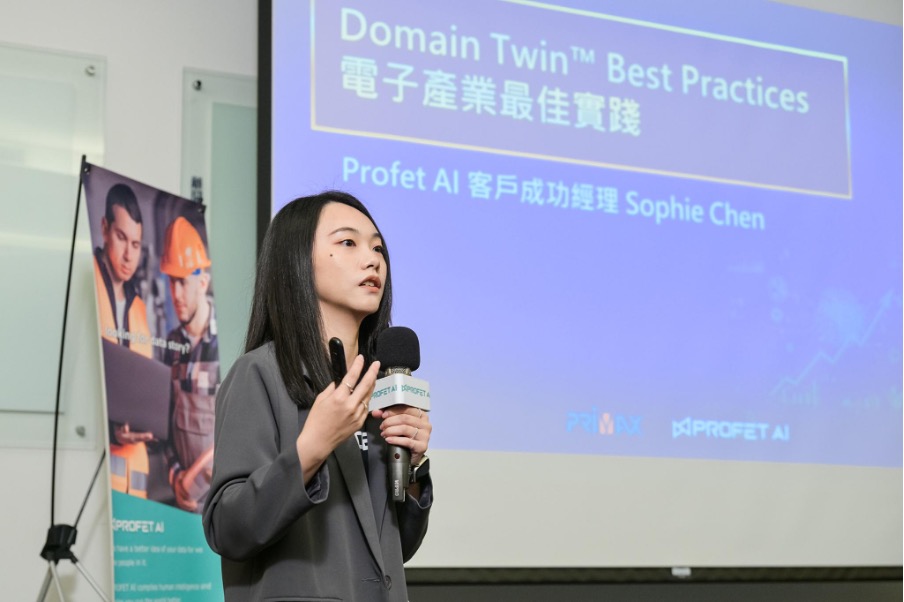
“Two or three years ago, people talked about AI with excitement. Today, anxiety seems to outweigh excitement.”
This opening remark by Sophie Chen, Customer Success Manager at Profet AI, cut straight to the point.
A few years ago, AI sparked curiosity and optimism. Today, however, people standing on the production line are asking more urgent questions:
Where should we start? Which process should we choose first? How can the experience of master technicians be translated into models? Why is it so hard to replicate processes across overseas plants? And with labor shortages intensifying, how can quality and efficiency afford to wait?
As the hype around AI fades, manufacturing is confronting a far more realistic and unforgiving question:
Is the factory truly ready for AI to go live—and generate real ROI?
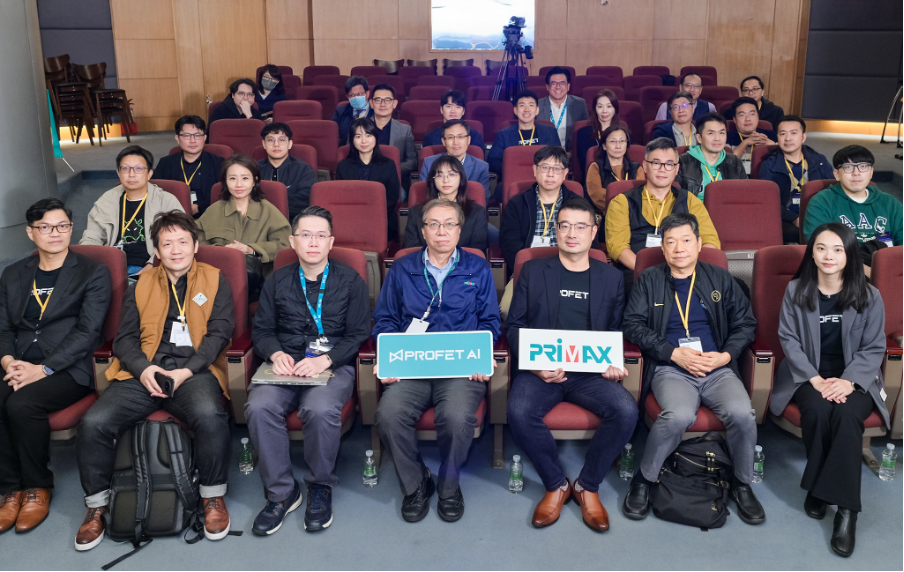
From labor shortages and overseas expansion to the loss of tacit expertise, Profet AI and Primax co-hosted a closed-door event, “Beyond PoC: From Demo to Dollar | AI × Robotics in Action.” Though small in scale, the session pieced together clear answers to what it really takes for AI × Robotics to move from concept to reality.
Elevating the Perspective: Making AI a Common Language in Manufacturing
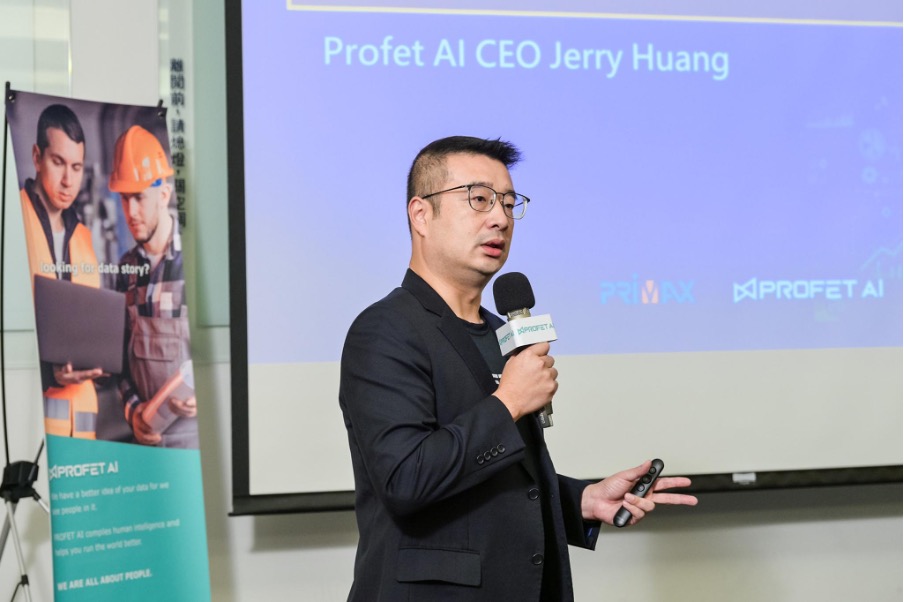
Profet AI CEO Jerry Huang opened by pointing out how rapidly the manufacturing landscape is shifting. Geopolitical tensions, tariffs, and supply-chain restructuring are forcing companies to build plants and expand capacity across regions at unprecedented speed—exposing a deeper challenge: the widening gap in talent and experience.
“If companies continue relying on hiring and training alone, they will fall behind within three to five years.”
Many organizations have realized that process know-how once sustained by veteran engineers is becoming increasingly difficult to replicate in overseas factories. Huang emphasized that AI matters today not because it is new, but because it can transform experience into a scalable capability.
He described AI in two complementary forms:
- Machine Learning (the left brain), which handles structured data and predictive tasks
- Generative AI / LLMs (the right brain), which supports reasoning, interpretation, and decision-making
When combined, AI becomes a carrier of knowledge. The intuition of experienced engineers no longer needs to remain locked in individuals’ minds—it can be encoded into models and transmitted to the next generation of engineers, overseas plants, and even robots.
“What companies really lack isn’t models, but people who can use them,” Jerry noted.
“If a veteran engineer can build a model within three or four hours, the value equation changes completely.”
This is not merely a skills upgrade—it is a cultural shift. When frontline engineers see AI as their tool, rather than something built by external experts, transformation accelerates dramatically.
After the Anxiety: Where Should AI Adoption Actually Begin?
As both a Customer Success Manager at Profet AI and a consultant for Primax’s AI Thinking Workshop, Sophie Chen hears the same question repeatedly—not about technology, but about where to start.
She outlined five common obstacles to real-world AI deployment:
- Scenario ambiguity — No clarity on which process to tackle first
- Data silos — Data fragmented across manufacturing, QA, R&D, and business units
- Talent gaps — A shortage of people fluent in both process engineering and AI
- Trust gaps — Veteran engineers skeptical of black-box outputs
- Process disconnects — Models built but unable to integrate into daily SOPs
Over the past two years, many companies have stalled at the PoC stage. Models work, reports look impressive—but nothing changes on the shop floor.
“AI implementation doesn’t end with delivering a model,” Sophie emphasized.
“It succeeds only when people actually reach out, use it, and see results.”
The real challenge lies not in technology, but in translation and guided execution.
She introduced Profet AI’s AI Thinking Workshop, a structured methodology that translates process pain points into actionable AI initiatives:
Cross-functional alignment → Topic selection → Problem definition → Prototype → ROI calculation
In Primax’s real-world case, a 30-hour workshop narrowed more than 50 ideas down to 8 AI projects, with an estimated annual impact of NTD 16 million in savings and 20 months of labor time.
“AI is a catalyst,” Sophie concluded, “but decision-making and knowledge always remain in human hands.”
From Inspection to Prediction: Primax × Profet AI in Process Intelligence
Many electronics manufacturers already rely on AOI systems. These systems can identify defects—but they rarely explain why defects occur, nor can they provide early warnings before issues escalate.
This leads to three recurring pain points on the factory floor:
- Problems are detected too late
- Parameter adjustments lack clear justification
- Valuable data remains underutilized
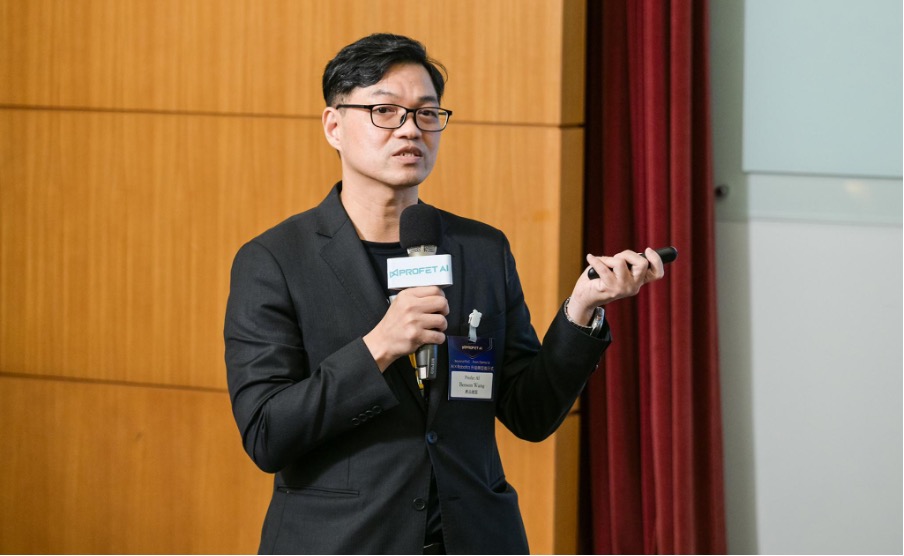
According to Benson Wang, Product Director at Profet AI, this was the starting point of the collaboration with Primax: transforming AOI from a detection tool into a decision-support and predictive system.
Primax brings deep expertise across vision, audio, and human–machine interfaces, along with rich imaging data. Profet AI contributes AutoML and domain AI methodologies to structure that data into models.
He illustrated the collaboration through a dispensing process case:
- AOI quantifies glue-line image features (overflow, offset, spacing, etc.)
- Data is fed into Profet AI AutoML for training
- Key factors correlated with airtightness defects are identified
- Results are validated through production-line back-testing
- Models are deployed to Vision Hub for real-time edge inference
Once deployed, AOI no longer merely records defects—it provides predictive signals earlier in the process, enabling engineers to intervene proactively.
“This isn’t about replacing human expertise,” Wang emphasized.
“It’s about providing more stable, evidence-based judgment—reducing trial and error and lowering the risk of batch scrap.”
The model is also highly scalable: once validated at one station, it can be replicated across processes, plants, and even extended to robotic inspection and exception handling.
From Equipment to Autonomous Mobility: Primax’s Technical Foundation for AI Deployment
From Equipment to Autonomous Mobility: Primax’s Technical Foundation for AI Deployment
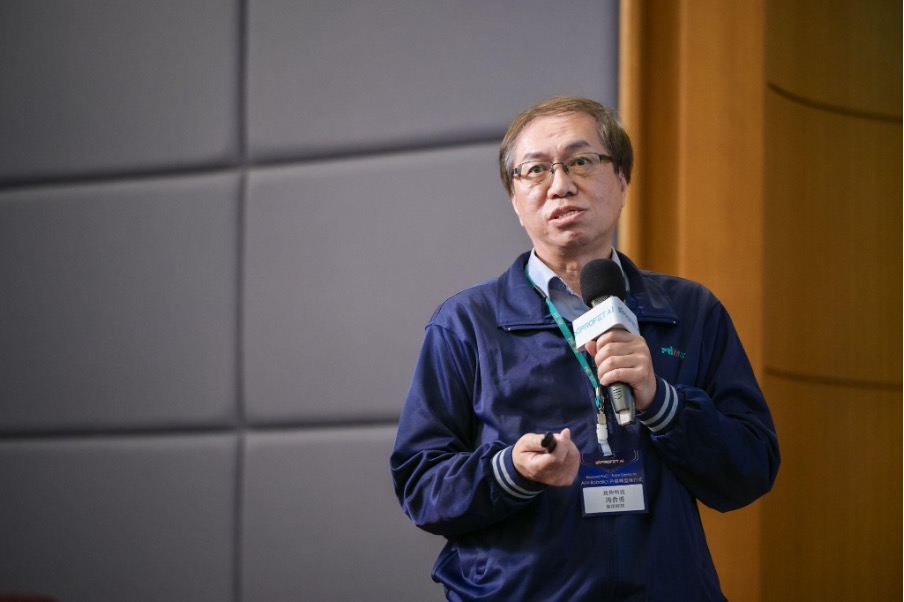
“Images, sound, and motion data have always existed—but they were never organized. AI makes this data useful for the first time.”
— Tim Feng, Senior Manager, Primax
For Primax, bringing AI into real operations was not a sudden shift. Its longstanding expertise—from camera modules and peripherals to motors and automation equipment—has enabled stable data acquisition and system integration on the factory floor.
This foundation allowed seamless collaboration with Profet AI. Primax ensures data is captured and visible; Profet AI transforms it into models and predictions. The result is a smarter, more replicable production flow.
Beyond equipment, Primax has also explored Autonomous Mobile Robots (AMR)—for a surprisingly practical reason.
“We didn’t build AMRs because it was trendy,” said Eddie Chen, Marketing Deputy Manager at Primax.
“Our restaurant genuinely lacked manpower.”
The company turned its own cafeteria into a real-world testing ground, allowing AMRs to operate among people, learn from daily interactions, and accumulate real operational experience—naturally extending the AI and robotics ecosystem.
Seeing Is Believing: AMR in Action at the Primax Cafeteria
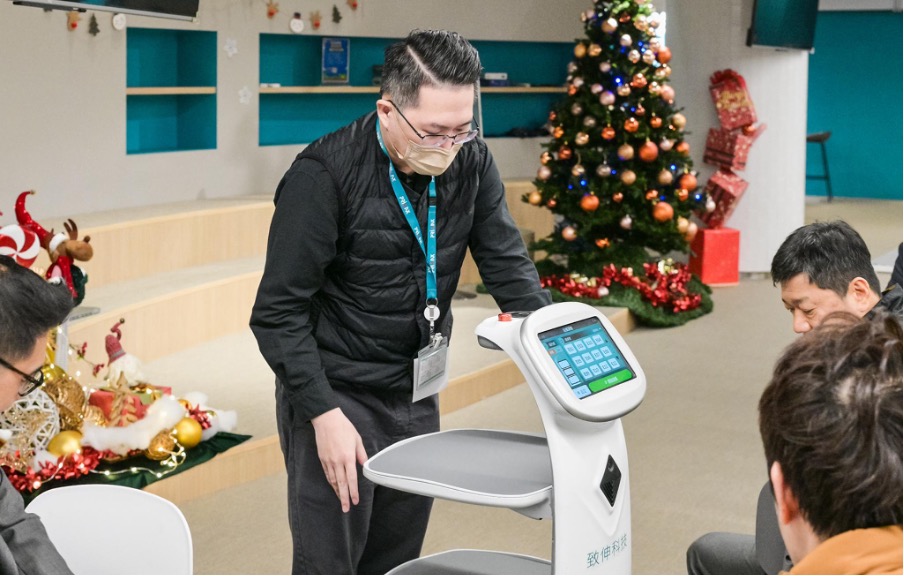
At the end of the event, participants visited Primax’s cafeteria to observe AMRs in operation.
There were no fixed seats or scripted demonstrations. The robot waited near the counter, received tasks, planned routes, navigated crowds, avoided obstacles, adjusted paths, and delivered coffee to designated tables.
This final experience served as a fitting conclusion to the From Demo to Dollar discussion.
AI × Robotics was no longer a concept—it was functioning seamlessly within everyday workflows. For participants, this simple observation completed the picture:
The future factory is already taking shape—not in grand visions, but in normalized, deployable, real-world scenarios.